
The short answer
A chimney inspection checks your fireplace, stove or heating flue from the firebox to the crown for creosote, cracks, blockages and water damage. The NFPA 211 standard calls for an inspection every year. More detailed inspection levels apply when you change appliances or fuel, when you sell the home, or when a hidden hazard is suspected.
A chimney inspection answers one practical question: is your fireplace, stove or heating flue safe to use right now? Our certified technicians examine the chimney from the firebox to the crown. They look for blockages, cracks, creosote and water damage, then tell you plainly what they found. Many Brooklyn homes have older masonry chimneys that serve fireplaces, boilers or both, and problems inside a flue are rarely visible from the living room. An inspection before the cold months, or whenever something changes with your heating system, gives you time to fix small issues before they become expensive or dangerous. You get a clear written summary with photos, not a sales pitch.
Signs you need it
Some chimney problems announce themselves. If you notice any of the signs below, schedule an inspection and avoid lighting a fire until it has been checked.
Even without warning signs, schedule an inspection once a year. You should also book one after a chimney fire, after storm damage, and when you buy or sell a home.
- A smoky or tar-like creosote smell, especially on humid days or when the air conditioning runs
- Poor draft, where smoke rolls into the room instead of rising up the flue
- Debris, flakes of brick or tile, or bits of mortar landing in the firebox
- White, chalky staining on interior or exterior brick, which means water is moving through the masonry
- Scratching, chirping or rustling sounds from inside the chimney
- Water pooling in the firebox, or rust on the damper and fireplace doors
What a chimney inspection includes
Every inspection covers the parts of the system that can be reached without opening walls or the chimney itself. Here is what we check:
If the flue is coated with soot or creosote, we can often clean it during the same visit. A clean flue lets the camera show the true condition of the liner.
- Firebox walls, floor and mortar joints for cracks and gaps
- Damper operation and seal
- Smoke chamber and smoke shelf for buildup and missing or damaged mortar
- Flue liner condition, including cracks, gaps, flaking and creosote level
- Connections from boilers, furnaces, water heaters or stoves into the flue
- Visible clearances between the chimney and nearby wood or other combustible materials
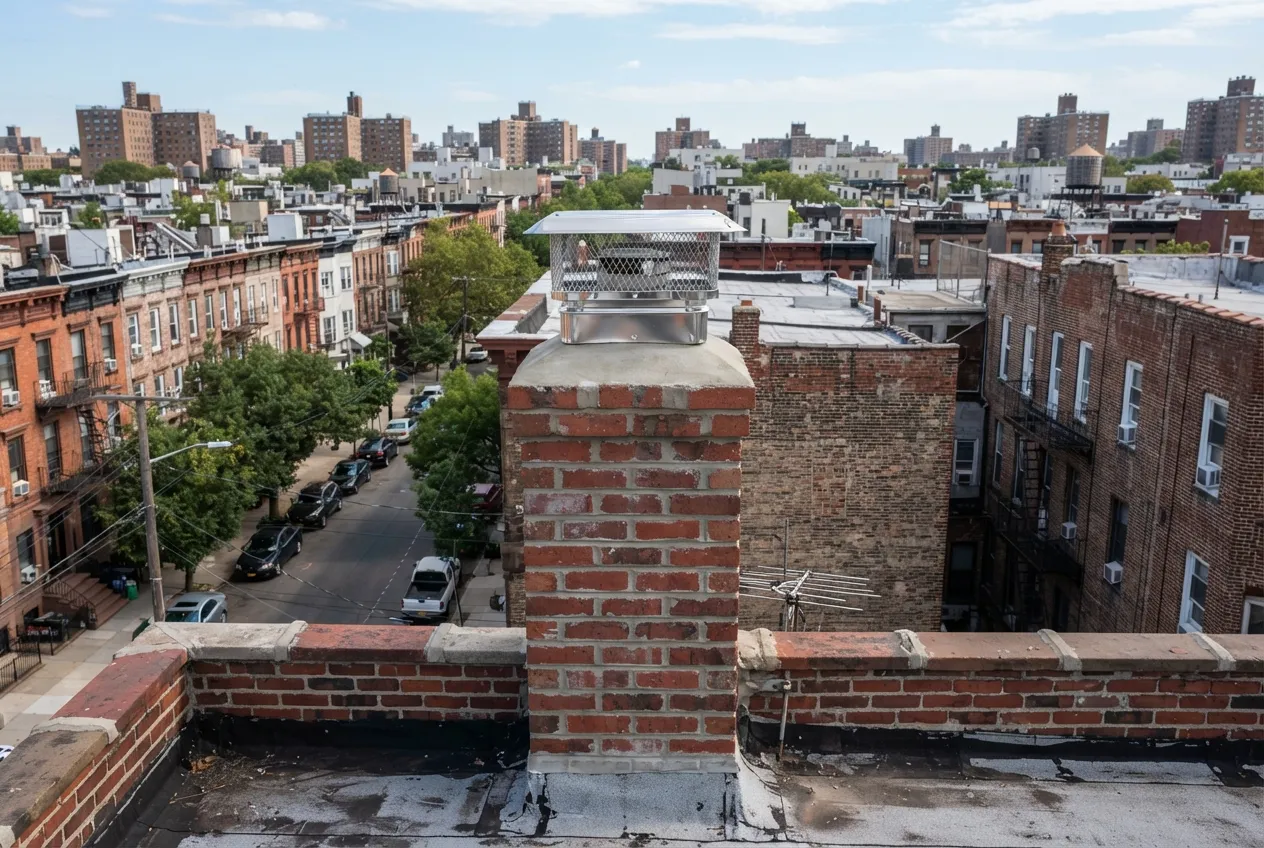
- Chimney cap, crown, flashing and exterior masonry, checked from the roof
- Signs of water entry, animal nests and other obstructions
- A written summary with photos and plain-language recommendations
How our crew works in your home and on the roof
Before touching anything inside, the crew lays drop cloths from your door to the fireplace or appliance and covers the hearth. A HEPA vacuum runs throughout the work to capture soot and fine dust so it does not drift through the room. If the flue needs cleaning, we use rotary brushes sized to your liner to loosen creosote and soot, and the vacuum pulls the debris out as it falls.
A video camera on a flexible rod lets us see the full length of the flue, including joints and cracks you cannot spot with a flashlight. We show you the footage on the spot so you see exactly what we see.
On the roof, technicians use proper ladders and fall protection. They check the cap, crown and flashing and look down the flue from the top. Many attached homes have shared roofs or tight access, so we confirm ahead of time how we will reach your chimney safely.
The standard we follow: NFPA 211 and the three inspection levels
We follow the NFPA 211 standard, which calls for chimneys, fireplaces and vents to be inspected once a year. Chimney professionals use three inspection levels, and we tell you up front which one fits your situation.
Fuel changes matter in New York City. When a building converts its boiler from oil to gas, the chimney has to be evaluated as part of the work. A new liner is often needed because gas exhaust produces acidic condensate that can corrode a masonry flue. If you are planning a conversion, talk to us before the work starts.
- Level 1: for a chimney in regular use when nothing about the system has changed
- Level 2: when the system changes, such as a new appliance or a switch of fuel, or when the home is being sold
- Level 3: when a hidden hazard has to be reached by opening part of the chimney or the building
What affects the price
Every chimney is different, so we quote once we know the details. The main factors are listed below.
We explain the cost before any work begins, and we do nothing beyond the inspection without your approval.
- Chimney height and how difficult the roof is to reach
- Fuel type: wood, gas, oil or a combination
- Flue size, shape and condition
- How much creosote or soot has built up
- Whether a camera inspection, a higher inspection level or repairs are needed
How a visit works
When you book, we ask about your fireplace or appliances, your fuel type, when the chimney was last serviced and any symptoms you have noticed. Your answers help us bring the right equipment and set aside enough time.
Let the fireplace or stove cool completely for at least a day before we arrive, and clear the area around the hearth. For boiler and water heater flues, we may also need access to the basement or utility room.
After the inspection, the technician walks you through the findings, shows you the photos or video, and gives you a written summary. If repairs are needed, we explain which ones are urgent and which can wait. New York City's heat season runs from October 1 through May 31. For heating flues, schedule your inspection before October, when boilers start running full-time.
Chimney Inspection by city
- Chimney Inspection in MadisonLocal service & repairs
- Chimney Inspection in Marine ParkLocal service & repairs
- Chimney Inspection in Mill BasinLocal service & repairs
- Chimney Inspection in Bergen BeachLocal service & repairs
- Chimney Inspection in FlatlandsLocal service & repairs
- Chimney Inspection in Sheepshead BayLocal service & repairs
- Chimney Inspection in Manhattan BeachLocal service & repairs
- Chimney Inspection in Gerritsen BeachLocal service & repairs
- Chimney Inspection in MidwoodLocal service & repairs
- Chimney Inspection in HomecrestLocal service & repairs
- Chimney Inspection in MapletonLocal service & repairs
- Chimney Inspection in GravesendLocal service & repairs