
The short answer
A chimney cap covers the flue opening, and a chase cover seals the top of a framed, factory-built chimney. Both keep rain, animals and debris out. If you see water in the firebox, hear animals in the chimney or find debris on the hearth, the top of your chimney likely needs a new cap or cover.
A chimney cap and a chase cover keep rain, snow, animals and debris out of the top of your chimney. When either one is missing, rusted through or the wrong size, water and wildlife get in, and the damage usually shows up inside the house first. EliteSweep Chimney Services installs, replaces and repairs chimney caps and chase covers for homeowners in Brooklyn and nearby neighborhoods, on brownstones, row houses, detached homes and small multifamily buildings. Our certified technicians start by looking at what you have and measuring every flue. Then they tell you plainly whether a repair, a replacement or a new installation makes sense.
Signs you need it
Problems at the top of a chimney are hard to see from the street, so most owners notice them indoors. If you see any of the following, have the cap or chase cover checked.
On a factory-built chimney, the chase cover is the metal pan over the framed enclosure. Rust streaks running down the siding or chase walls, or water stains on a ceiling near the chimney, often mean the cover is rusted, cracked or holding standing water.
- Water in the firebox, or damp, rust-colored marks on the damper or fireplace doors after rain
- Animal noises in the chimney, such as scratching, chirping or fluttering, especially in spring
- Debris or brick flakes in the firebox, including leaves, twigs, nesting material or bits of mortar
- White staining on the brick, a chalky residue that shows water is moving through the masonry
- Poor draft, where smoke lingers or rolls into the room because a nest or debris is partly blocking the flue
- A smoke or creosote smell that gets stronger in humid or rainy weather, when moisture mixes with deposits in the flue
What's included
Every cap and chase cover job includes the same core steps. This applies whether we are replacing one cap on a single flue or covering a wide chase with several pipes.
If animals are nesting in the chimney, we confirm the flue is clear before closing the top. We do not seal a live animal inside a chimney.
- A check of the top of the chimney: crown, cap, chase cover, flashing and any visible mortar or siding damage
- Measuring each flue and the chase top so the cap or cover fits instead of being forced into place
- Removing the old, damaged or poorly fitted cap or chase cover
- Clearing nests, leaves and loose debris from the top of the flue
- Installing a cap with a mesh screen to keep out animals and stop embers, sized for your flue and fuel type
- For factory-built chimneys, fitting a chase cover shaped so water runs off instead of pooling, plus a storm collar where the flue passes through
- Fastening and sealing the cap or cover so it stays secure in wind and storms
- Photos of the finished work and notes on anything else we saw, such as a cracked crown or loose flashing
How the crew works on the roof and inside your home
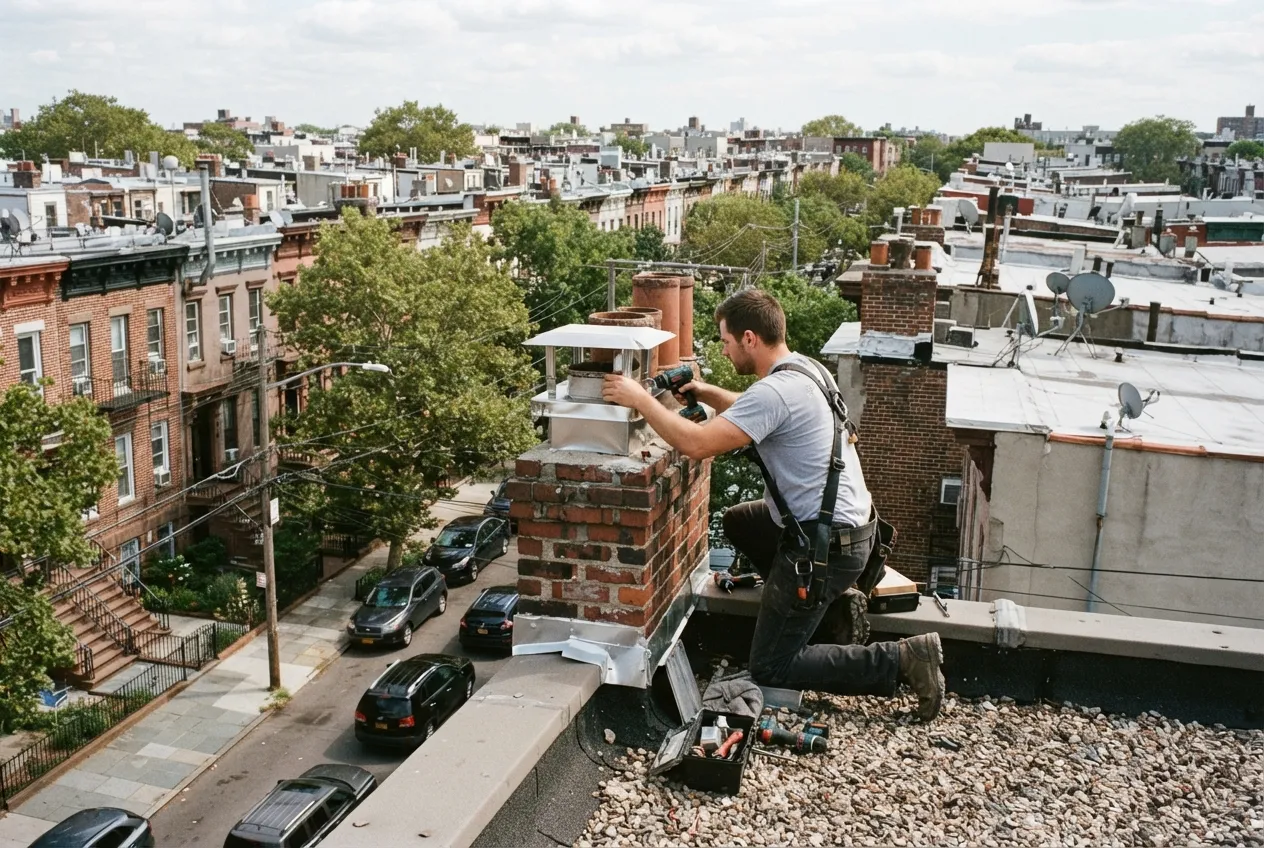
Most of this job happens on the roof. The crew sets up ladders and fall protection, protects the roof surface where they stand and stage tools, and keeps old metal and debris contained so nothing lands in your gutters or yard. Many Brooklyn homes have flat roofs reached through a hatch or bulkhead, so we confirm access with you before the visit.
We also come inside when the job calls for it. Before opening the fireplace or touching the damper, we lay drop cloths from the door to the hearth and run HEPA vacuums to keep soot and dust out of the room. If nesting material or debris has fallen into the flue, we clear it with rotary brushes. Where we need to see damage we cannot reach, such as a cracked flue tile or water inside the flue, we run a camera and show you the footage.
The standard we follow
We follow the NFPA 211 standard, which calls for chimneys, fireplaces and vents to be inspected once a year. A cap or chase cover visit is a good time for that inspection, since we are already working at the top of the chimney.
Chimney professionals use three inspection levels. Level 1 applies when nothing about the system has changed. Level 2 applies when something has changed, such as a new appliance or a switch of fuel, or when the home is being sold. Level 3 applies when a hidden hazard has to be reached by opening part of the chimney or building. Most cap jobs pair with a Level 1 check, and we will tell you if anything we find points to a higher level.
If your building has converted its boiler from oil to gas, New York City requires the chimney to be evaluated as part of that work. A new liner is often needed because gas exhaust produces acidic condensate that can corrode a masonry flue. In that case we size the cap to the new liner, not the old flue.
What affects the price
We price each job after seeing the chimney, and you get a written estimate before any work begins. The main factors are:
- Chimney height and roof access: tall stacks, steep pitches and limited roof access take more setup
- Fuel type: wood, gas and oil appliances call for caps with different screens and materials
- Flue size, number of flues and condition: a single-flue cap differs from one that covers several flues, and a damaged flue top may need repair first
- How much buildup and debris there is, including nests that have to be removed
- Whether a camera inspection or repair is needed, such as crown work, flashing or a custom-made chase cover
How a visit works
Contact us and tell us what you are seeing. We schedule a visit and confirm roof access. On the day of the visit, the technician inspects the top of the chimney, takes measurements and walks you through the options with photos. Standard caps can often be installed during the same visit. Custom chase covers and caps for several flues are measured first and installed on a return trip.
New York City's heat season runs from October 1 through May 31, when heating systems run the hardest. Getting the top of the chimney covered before fall keeps water and animals out before the boiler or fireplace starts running every day.