
The short answer
Chimney repair fixes the damage that water, heat and age do to masonry, flues, dampers and caps, from cracked crowns and crumbling mortar to failing liners. EliteSweep Chimney Services inspects first, gives you photos and a written quote, then makes the repairs with your home protected.
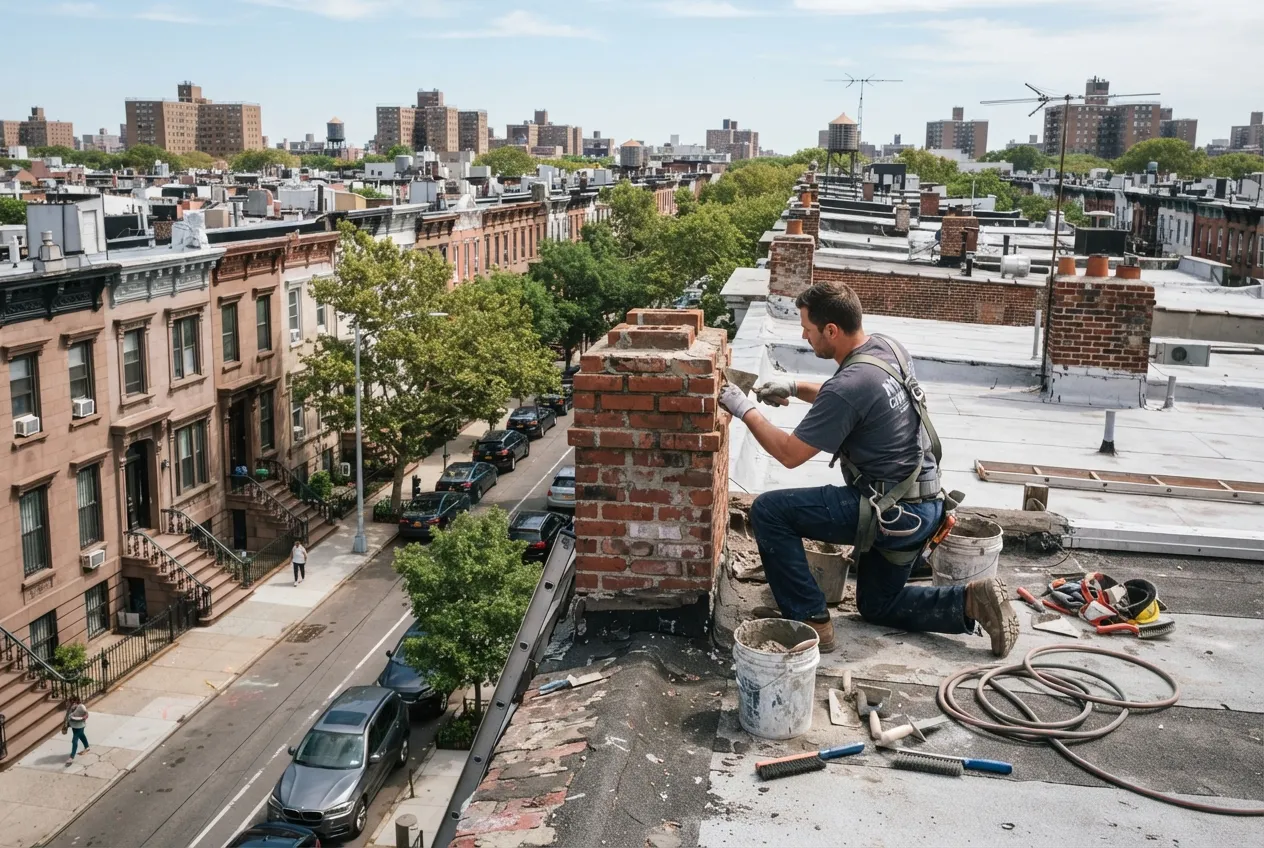
A chimney takes damage from both sides. Heat, smoke and acidic exhaust wear on the inside of the flue, while rain, freeze-thaw cycles and wind work on the brick and mortar outside. Many Brooklyn homes are older masonry row houses and brownstones, so small problems like a cracked crown or loose flashing can lead to water damage inside walls if they sit too long. EliteSweep Chimney Services repairs chimneys for homeowners in Brooklyn and nearby neighborhoods, from mortar and crown work to dampers, caps and liners. Our certified technicians find the cause first, then fix what actually needs fixing.
Signs You Need Chimney Repair
Most chimney problems show up gradually. Homeowners usually notice one or more of these first:
One sign alone doesn't always mean a big repair. But any of them is worth checking before you light the next fire or before the heating season starts.
- Water in the firebox, or damp stains on the ceiling or wall next to the chimney after rain
- White staining on the brick, a sign that water is moving through the masonry
- Brick flakes, crumbled mortar or pieces of flue tile falling into the firebox
- Poor draft, with smoke rolling into the room instead of going up the flue
- A smoke or creosote smell in the house, especially on humid days or when the air conditioning runs
- Animal noises in the chimney, which often points to a missing or damaged cap
- Loose, cracked or leaning brick, or gaps where the chimney meets the roof
What's Included in Chimney Repair
Every repair visit starts with an inspection, so the quote covers the real problem, not only the symptom. Depending on what we find, the work can include:
We tell you which items are urgent and which can wait, so you can plan the work and the budget.
- Inspection of the firebox, damper, smoke chamber and flue, with a camera inspection when hidden damage is suspected
- Exterior check of the crown, cap, flashing, brick and mortar joints
- Repointing: removing failed mortar and packing new mortar into the joints
- Replacing spalled or broken brick
- Crown repair or rebuild so water sheds away from the flue
- Flashing repair or replacement where the chimney meets the roof
- Chimney cap installation or replacement to keep out rain and animals
- Damper repair or replacement, including top-sealing dampers
- Flue tile repair, or a new liner when the flue is cracked or the appliance requires one
- Firebox repair with refractory mortar or new firebrick
- Water repellent for the masonry where it fits the job
- Photos and a written summary of what we found and what we did
How Our Crew Works Inside Your Home and on the Roof
Inside, the crew lays drop cloths along the path to the fireplace and covers the hearth before opening anything. The fireplace opening is sealed off, and HEPA vacuums run during any work that can stir up soot or mortar dust. If the flue needs cleaning so we can see the liner clearly, we use rotary brushes. A camera goes down the flue when we need to see joints and tiles that aren't visible from the top or the bottom.
On the roof, technicians check access first and set up ladders and safety gear for the roof type. Masonry repairs use materials matched to the existing chimney. Debris is bagged and carried down, not tossed off the roof. Before we leave, we clean up, test the damper and the draft when we can, and walk you through the before-and-after photos.
The Standards We Follow
We follow the NFPA 211 standard, which calls for chimneys, fireplaces and vents to be inspected once a year. Chimney professionals use three inspection levels. Level 1 applies when nothing about the system has changed. Level 2 applies when something changes, such as a new appliance or a switch of fuel, or when the home is sold. Level 3 is for cases where a hidden hazard can only be reached by opening part of the chimney or the building.
This matters in New York City during boiler conversions. When a building converts its boiler from oil to gas, the chimney has to be evaluated as part of the work. A new liner is often needed, because gas exhaust produces acidic condensate that can corrode a masonry flue. If your building is planning a conversion, schedule the chimney evaluation early.
Timing matters too. The city's heat season runs from October 1 through May 31, when building owners must keep apartments heated to the city's minimum temperatures. Repairs on a boiler or furnace flue are easier to schedule before October.
What Affects the Price
Every chimney is different, so we price repairs after we've seen yours. The main factors are:
You get a written quote before any repair work begins.
- The height of the chimney and how hard the roof is to reach
- Fuel type, such as wood, gas or oil, which affects the liner and the repair materials
- Flue size, shape and condition
- How much soot or creosote buildup has to be removed before repairs can start
- Whether a camera inspection is needed
- The size of the repair, from a few mortar joints to a crown rebuild or a full relining
How a Repair Visit Works
Here is what to expect from first contact to finished work:
- You contact us and describe what you're seeing. Photos of stains, cracks or debris help.
- We schedule an inspection and confirm roof access and any building rules.
- The technician inspects inside and out, using a camera if needed, and shows you photos.
- You get a written quote that separates urgent repairs from ones that can wait.
- Once you approve, we schedule the work, protect your home, complete the repair and clean up.
- We review the finished work with you and note when your next yearly inspection is due.
Chimney Repair by city
- Chimney Repair in MadisonLocal service & repairs
- Chimney Repair in Marine ParkLocal service & repairs
- Chimney Repair in Mill BasinLocal service & repairs
- Chimney Repair in Bergen BeachLocal service & repairs
- Chimney Repair in FlatlandsLocal service & repairs
- Chimney Repair in Sheepshead BayLocal service & repairs
- Chimney Repair in Manhattan BeachLocal service & repairs
- Chimney Repair in Gerritsen BeachLocal service & repairs
- Chimney Repair in MidwoodLocal service & repairs
- Chimney Repair in HomecrestLocal service & repairs
- Chimney Repair in MapletonLocal service & repairs
- Chimney Repair in GravesendLocal service & repairs