
The short answer
Chimney waterproofing protects brick and mortar from water damage. A breathable water repellent goes on after we find and fix the leak points, such as the crown, flashing and cap. We inspect first, because sealing brick alone won't stop a leak that comes from somewhere else.
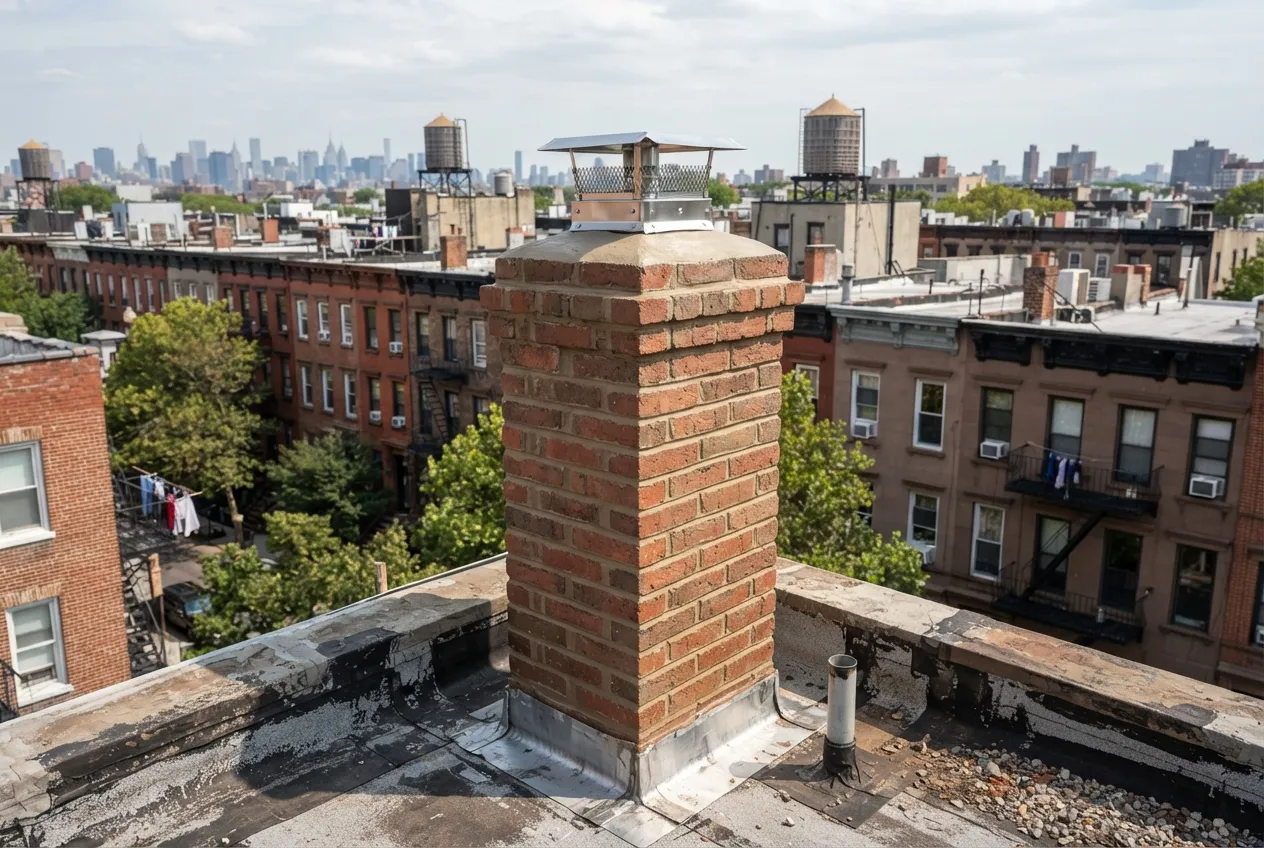
A chimney sits above the roofline and takes the full force of rain, snow and wind. Brick and mortar are porous, so water works its way in. During Brooklyn's freeze-thaw winters, that water expands, cracks the masonry and pushes the face off the brick. Moisture also rusts dampers and caps, stains the ceilings and walls next to the chimney, and wears down the flue lining. EliteSweep's chimney waterproofing service has three parts. We find where the water is getting in and fix the parts that let it in. Then we treat the exposed masonry with a breathable water repellent, so the brick sheds rain while trapped moisture can still escape.
Signs you need it
Water damage usually shows up indoors before anyone looks at the roof. Call us if you notice any of these:
One sign on its own doesn't always mean the brick needs sealing. Many leaks come from a cracked crown, failed flashing or a missing cap, and a water repellent won't fix those. That's why every job starts with finding the source.
- White, chalky staining on the brick, inside or out. This is salt left behind as water moves through the masonry.
- Water or puddles in the firebox, or rust on the damper and grate
- Brick flakes, mortar sand or other debris collecting in the firebox
- A musty, damp smell from the fireplace, or a smoke and creosote odor that gets stronger on humid or rainy days
- Bricks outside with faces popping off or crumbling
- Water stains on the ceiling or walls next to the chimney
- Cracks in the concrete crown at the top of the chimney
What's included
Every waterproofing visit covers the whole path water takes into the chimney, not just the brick surface. We only apply repellent to sound masonry. If mortar joints are badly worn or the crown is failing, we'll recommend that repair first and explain why.
- Inspection of the chimney exterior, crown, cap, flashing and mortar joints
- Interior check of the firebox, damper and smoke chamber for water damage
- Camera inspection of the flue where liner damage from moisture is suspected
- Cleaning of the masonry surface to remove dirt, moss and loose material before treatment
- Sealing of hairline cracks in the crown, or a recommendation if the crown needs rebuilding
- Inspection of the flashing where the chimney meets the roof, with resealing where needed
- Application of a breathable water repellent to the exposed brick and mortar
- Check of the chimney cap and screen, with a recommendation if either is missing or damaged
- Photos and a written summary of what we found and what we did
How the crew works inside your home and on the roof
Inside, the crew lays drop cloths from your door to the fireplace and covers the hearth before anything is opened. Sometimes the flue needs sweeping before we can see the liner clearly. In that case, we use rotary brushes with HEPA vacuums running, so soot stays in the chimney and out of the room. Then we run a camera down the flue to look for cracked tiles, gaps in the mortar joints, and staining that shows where water has been traveling.
On the roof, the crew sets up safe access and protects the roofing around the chimney. We check the crown, cap and flashing by hand. The masonry is cleaned and allowed to dry before the repellent goes on, because sealing wet brick traps water inside. We use breathable products, not paint or plastic-type coatings, which can hold moisture in and make flaking worse. We don't apply repellent in rain or freezing temperatures, so a roof day may move if the forecast turns.
If your building has converted its boiler from oil to gas, moisture inside the flue is a separate concern. Gas exhaust produces acidic condensate that can corrode a masonry flue. New York City requires the chimney to be evaluated as part of that conversion, and a new liner is often needed. Exterior waterproofing won't fix that problem, and we'll tell you if we see signs of it.
The standard we follow
The NFPA 211 standard calls for chimneys, fireplaces and vents to be inspected once a year. We inspect before we waterproof. Chimney professionals use three inspection levels:
Most waterproofing jobs start with a Level 1 or Level 2 inspection, depending on the chimney's history. Our certified technicians will tell you which level applies before any work begins. New York City's heat season runs from October 1 through May 31. Many owners schedule waterproofing in the warmer, drier months, so the chimney is protected before heavy use.
- Level 1: used when nothing about the system has changed
- Level 2: used when the system changes, such as a new appliance or a switch of fuel, or when the home is sold
- Level 3: used when a hidden hazard can only be reached by opening part of the chimney or building
What affects the price
Every chimney is different, so we give you a written estimate after the inspection and before any work starts. The main factors are:
- Chimney height and roof access, including the number of stories and whether the roof is flat or steep
- The size of the chimney and how many flues it has
- Fuel type (wood, oil or gas), which affects what we look for inside the flue
- Flue size and condition
- How much buildup there is, from dirt and moss on the brick to creosote inside if sweeping is needed
- Whether a camera inspection is needed
- Whether repairs come first, such as repointing, crown work, flashing or a new cap
How a visit works
When you book, we ask a few questions about your chimney and what you've noticed, so the crew arrives prepared. On the day, the technicians protect your floors, inspect inside and on the roof, and walk you through what they found, with photos.
If waterproofing is the right fix, we explain the steps and give you the estimate. If other repairs are needed first, we tell you which ones and why. Once you approve, the crew cleans the masonry, makes any agreed repairs, and applies the repellent when the weather allows. Before leaving, they clean up the work area and give you a written summary of the work for your records.