
The short answer
Dryer vent cleaning removes lint from the full duct run between your dryer and the outside wall vent or roof cap. The U.S. Fire Administration identifies failure to clean as the leading factor contributing to home dryer fires. Most homes should have the vent cleaned about once a year, or sooner if clothes start taking longer to dry.
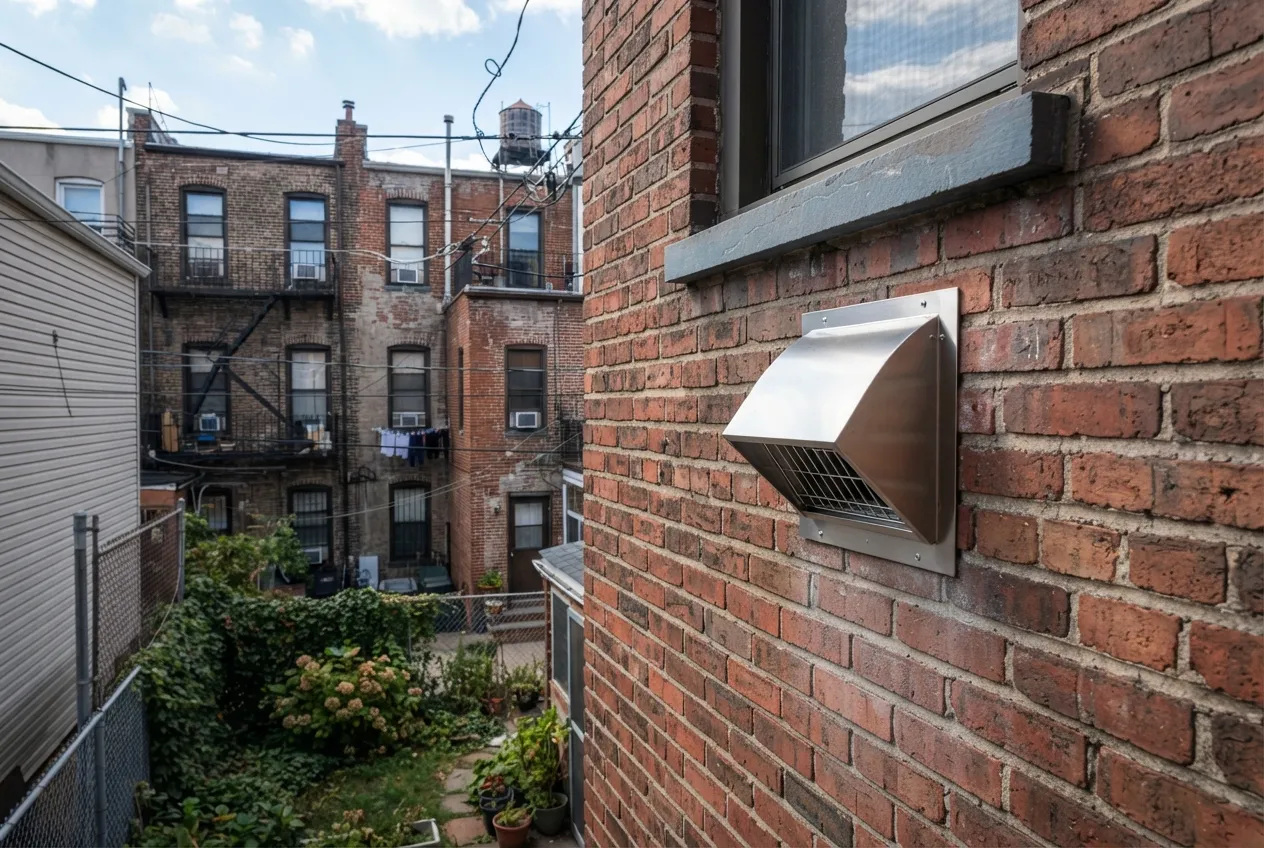
A dryer vent carries hot, damp, lint-heavy air from your dryer to the outdoors. In Brooklyn homes that path is rarely short or straight. In rowhouses and brownstones the duct may run through a wall cavity, under a floor, or up several stories to the roof. In basement laundry rooms and attached homes it often makes several turns before it reaches the outside. Every bend and joint is a place where lint can settle and build up. EliteSweep Chimney Services cleans dryer vents from the dryer connection all the way to the outside termination. That clears the lint that collects out of sight and lets air move freely again.
Signs you need it
Most dryer vent problems show up in the laundry first. A load that used to dry in one cycle starts needing two, or the dryer feels hotter than it should. Other signs are easier to miss because they happen outside or inside the walls.
- Clothes need more than one cycle to dry, or come out hot but still damp
- The dryer or laundry room gets unusually hot while the dryer runs
- A burning or scorched smell while the dryer is running
- Lint collecting around the dryer door, behind the machine, or on the floor nearby
- The outside vent flap barely opens, or airflow feels weak outdoors while the dryer runs
- Lint or dust blowing back into the room at the dryer connection
- Bird or animal noises near the vent, or nesting material at the outside hood
- More than a year since the last cleaning, or no record that the vent has ever been cleaned
What's included
A standard dryer vent cleaning covers the full run, not just the lint screen and the first few feet of hose. Here is what the visit includes:
- Carefully pull out the dryer and disconnect the transition duct
- Check the transition hose for crushing, kinks, and material type
- Clean the full vent run with rotary brushes, working from the dryer end and from the outside end where access allows
- Capture loosened lint with a HEPA vacuum
- Clean the exterior hood or roof cap and check that the damper opens and closes
- Remove nests, debris, or other blockages at the termination
- Clean the lint screen housing and the floor behind and under the dryer
- Reconnect the dryer, run it, and check airflow at the outside termination
- Run a camera through the duct where bends or hidden sections make it useful
- Give you a plain-language summary of what we found and any repairs we recommend
How our crew works inside your home and on the roof
Before anything is moved, the crew lays drop cloths from the entry to the laundry area and around the dryer. The dryer is slid out with care to protect your flooring. Gas dryers are handled so the gas connection isn't strained. Lint loosened by the rotary brush goes straight into a HEPA vacuum so it doesn't drift through the room. Where the vent disappears into a wall, ceiling, or floor, we may run a camera through the duct. The camera shows turns, joints, and crushed or separated sections that can't be seen from the opening.
Many Brooklyn vents end at the roof rather than a side wall. In those homes a technician also works from the roof. They open the cap, brush down from the top, and clear lint packed into the cap or damper. Caps fitted with fine mesh screens tend to clog with lint quickly. If we find one, we'll explain the problem and your options. We also look at the cap, the flashing around it, and how the termination sits on the roof, and we photograph anything you should know about.
When the work is finished, the drop cloths are folded inward so debris stays contained. The area is vacuumed, and the dryer goes back in place.
Why regular cleaning matters
According to the U.S. Fire Administration, failure to clean is the leading factor contributing to clothes dryer fires in homes. Lint is light, dry, and burns easily, and a dryer creates heat right next to it. Emptying the lint screen after every load helps. But lint that gets past the screen ends up in the duct, where you can't reach it.
A restricted vent also makes the dryer work harder. Longer cycles mean more energy use and more wear on the heating element and blower. With a gas dryer, a blocked vent can keep combustion gases from leaving the home the way they should. That is one more reason to keep the run clear and to have working carbon monoxide alarms. You may need cleaning more often than once a year if you do a lot of laundry, have pets, or have a long or roof-terminated vent.
What affects the price
Every vent is set up differently, so we look at the layout before we quote the job. The main factors are:
If we find something that needs repair, we explain it and price it before doing any of that work.
- How long the run is and how many bends it has
- Where the vent ends (a ground-level wall, a high wall, or the roof) and how easy the roof is to reach
- Whether the dryer is gas or electric, which affects how it is disconnected and reconnected
- Duct size, material, and condition, including foil or vinyl sections that may need replacing
- How much lint has built up, and whether there are nests or other blockages
- Whether a camera inspection is needed to see hidden sections
- Repairs such as replacing a crushed transition hose, reconnecting separated joints, or replacing a damaged cap
How a visit works
When you contact us, we'll ask where your dryer is, whether it's gas or electric, and where the vent ends outside, if you know. That helps us bring the right equipment and plan for roof access. If you live in a multi-family building or co-op, check whether you need building approval or need to arrange roof access ahead of time.
On the day of the visit, the technician looks over the vent route with you, sets up floor protection, and does the cleaning. Afterward we run the dryer to confirm airflow, show you photos where we took them, and go over anything we noticed. Before we arrive, please clear a path to the laundry area. If you can, avoid running the dryer for a few hours beforehand so it has time to cool.