
The short answer
Fireplace and damper repair fixes the parts that control smoke, draft and heat: the firebox, the mortar joints, the smoke chamber and the damper itself. EliteSweep inspects the fireplace following the NFPA 211 standard, shows you what is damaged, and repairs it with clean, protected work inside your home.
A fireplace that smokes into the room, a damper that won't open or close, or a firebox with crumbling joints is more than an annoyance. These parts hold heat, smoke and fire where they belong, and when they wear out, the problems tend to spread into the flue, the masonry and the room around it. EliteSweep Chimney Services repairs fireplaces and dampers for homeowners in Brooklyn and nearby neighborhoods, from older brownstones and row houses with original masonry fireplaces to newer homes with factory-built units. Our certified technicians start by finding the cause, explain what they see in plain terms, and fix the parts that need it. Below you'll find the warning signs to watch for, what the work includes, how we protect your home, and how a visit runs from start to finish.
Signs you need fireplace or damper repair
Most fireplace problems give some warning before they become serious. If you notice any of the following, it's a good time to have the fireplace and damper looked at before your next fire.
- Smoke or a creosote smell in the room, especially on humid days or when the fireplace isn't in use, which often points to a damper that no longer seals
- Poor draft: smoke rolling out of the fireplace opening instead of rising up the flue
- Brick flakes, loose mortar or crumbled debris collecting in the firebox
- White, chalky staining on the brick around or inside the fireplace, a sign that moisture is moving through the masonry
- Water in the firebox or rust on the damper plate after rain
- Scratching, chirping or other animal noises above the damper
- A damper handle or chain that sticks, spins freely, or won't hold the plate open or shut
What's included in a fireplace and damper repair visit
Every repair starts with an inspection, because the visible symptom is not always where the problem begins. Once the cause is clear, the work typically covers the items below. We review the findings and the proposed work with you before any repair begins.
- Inspection of the firebox, damper, smoke chamber, hearth and visible flue
- Repointing open or eroded firebox joints with refractory mortar rated for fireplace heat
- Replacing cracked or spalled firebrick, or rebuilding firebox panels when damage is extensive
- Repairing, realigning or replacing cast-iron throat dampers, including handles, chains and pivots
- Installing a top-sealing damper at the top of the flue when the original throat damper can't be restored
- Parging the smoke chamber to smooth rough or stepped masonry that disrupts draft
- Sealing cracks in the hearth and checking clearance to nearby woodwork
- Clearing nesting material and debris from the damper area
- Photos of the before-and-after condition for your records
How our crew works inside your home and on the roof
Fireplace work happens in your living space, so we treat the room with care. Before any tools come out, the crew lays drop cloths from the door to the hearth and covers nearby furniture and flooring. HEPA vacuums run during cleaning and demolition to capture fine soot and masonry dust rather than spreading it through the house.
When the firebox and smoke chamber need cleaning before repair, we use rotary brushes sized to the flue so new mortar bonds to sound masonry instead of soot. Where the problem is out of sight, such as damage above the damper or inside the smoke chamber, we use a camera to see the area and show you the footage. That way you see the same thing we see.
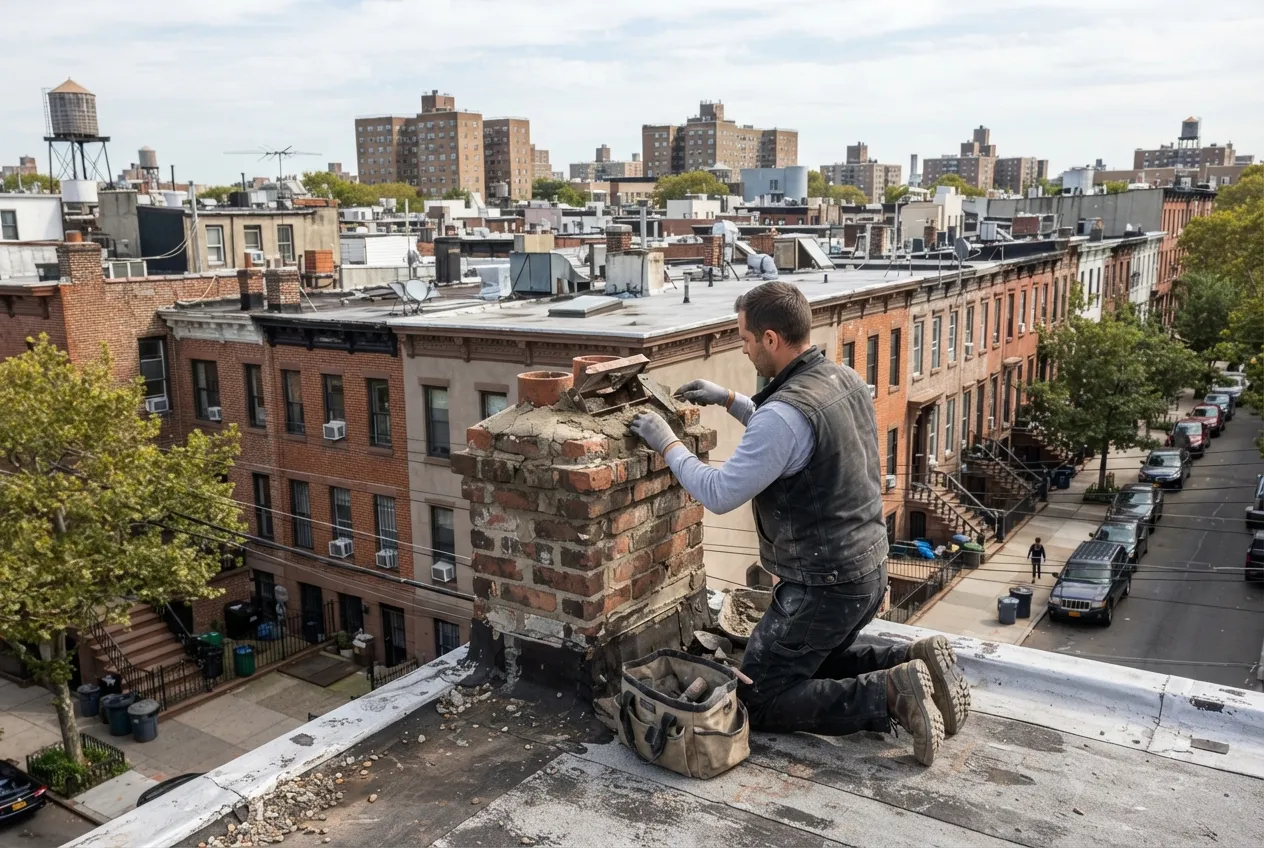
Many damper and draft issues also involve the top of the chimney. When roof access is safe, a technician checks the crown, cap and flue opening, since a missing cap or cracked crown often explains water in the firebox or animals above the damper. Top-sealing dampers are installed from the roof, with the control cable run down to the fireplace. We clean up fully before leaving, inside and out.
The standard we follow
Our work follows NFPA 211, the national standard for chimneys, fireplaces and vents. It calls for these systems to be inspected once a year. Chimney professionals use three inspection levels. Level 1 applies when nothing about the system has changed. Level 2 applies when the system changes, for example a new appliance or a switch of fuel, or when the home is sold. Level 3 applies when a hidden hazard has to be reached by opening part of the chimney or building.
For most fireplace and damper repairs, a Level 1 or Level 2 inspection gives us what we need. If you're adding a gas log set or an insert, that change calls for a Level 2 inspection. We tell you which level fits your situation and why before we begin.
What affects the price
Every fireplace is different, so we quote after we've seen it. The main factors are:
- Chimney height and roof access, especially for top-sealing damper installation
- Fuel type: wood-burning, gas, or a conversion between them
- Flue size and condition, and whether the damper is a standard or custom size
- How much soot and creosote buildup has to be removed before repair
- How much of the firebox needs repointing or rebuilding
- Whether a camera inspection is needed to find hidden damage
How a visit works
You contact us and describe what you're noticing: smoke, smells, a stuck damper, water or debris. We schedule a visit and ask a few questions about the fireplace and fuel type so the technician arrives prepared.
On the day of the visit, the technician protects the room, inspects the fireplace and damper, and checks the roof when it's relevant. You get a clear explanation of what's wrong, photos or camera footage where they help, and a written description of the recommended repair and the price before work starts.
Smaller repairs, like damper adjustments and minor repointing, can often be done the same day. Larger jobs, such as firebox rebuilds or top-sealing damper installation, are scheduled once you approve them. Fresh refractory mortar needs time to cure, so we'll tell you when the fireplace is ready for its first fire.