
The short answer
A chimney sweep removes creosote, soot and debris from your flue and checks the parts of the system you can't easily see, so your fireplace or heating appliance vents safely. The NFPA 211 standard calls for chimneys to be inspected once a year, and most Brooklyn homeowners schedule a sweep before the heating season starts.
A chimney that hasn't been swept collects creosote, soot and debris that can catch fire, narrow the flue or push smoke back into the room. EliteSweep Chimney Services cleans wood-burning fireplaces, wood and pellet stoves, and the flues that serve gas and oil heating equipment in brownstones, row houses and detached homes across Brooklyn and nearby neighborhoods. Our certified technicians sweep the flue, check the firebox, damper, smoke chamber and crown, and tell you plainly what they found. If something needs repair, you get an explanation and photos before any repair work is scheduled. This page covers the warning signs to watch for, what a sweep includes, how we protect your home, and what to expect on the day of the visit.
Signs you need a chimney sweep
Many chimney problems give some warning before they become dangerous. If you notice any of the following, it's worth having the chimney swept and looked at before your next fire or before the heating system runs hard for the winter.
- A smoky or campfire smell in the house, especially on humid days or when the air conditioning is running
- Poor draft: smoke rolls into the room instead of going up, or fires are hard to start and keep going
- Black flakes, soot or crumbled brick and mortar pieces collecting in the firebox
- White staining on the outside brick, which usually means moisture is moving through the masonry
- Scratching, chirping or rustling sounds from inside the chimney
- Water or damp debris in the firebox after rain or snow
- Shiny, tar-like deposits on the damper or inside the flue
What's included in a chimney sweep
Every sweep follows the same checklist so nothing gets skipped. If the technician finds something that needs a closer look, they'll explain why before going further.
- Setting up drop cloths and a HEPA vacuum at the fireplace or appliance opening
- Brushing the flue from top to bottom with rotary or rod brushes sized to your flue
- Cleaning the smoke chamber, smoke shelf and damper area
- Removing soot, creosote and debris from the firebox
- Checking the damper for smooth opening and a proper seal
- Looking over the firebox for cracked brick, missing mortar or damaged panels
- Checking the chimney cap, crown and flashing from the roof where access is safe
- Camera inspection of the flue lining when buildup, damage or a system change calls for it
- A plain-language report of what we found, with photos
How our crew works in your home and on the roof
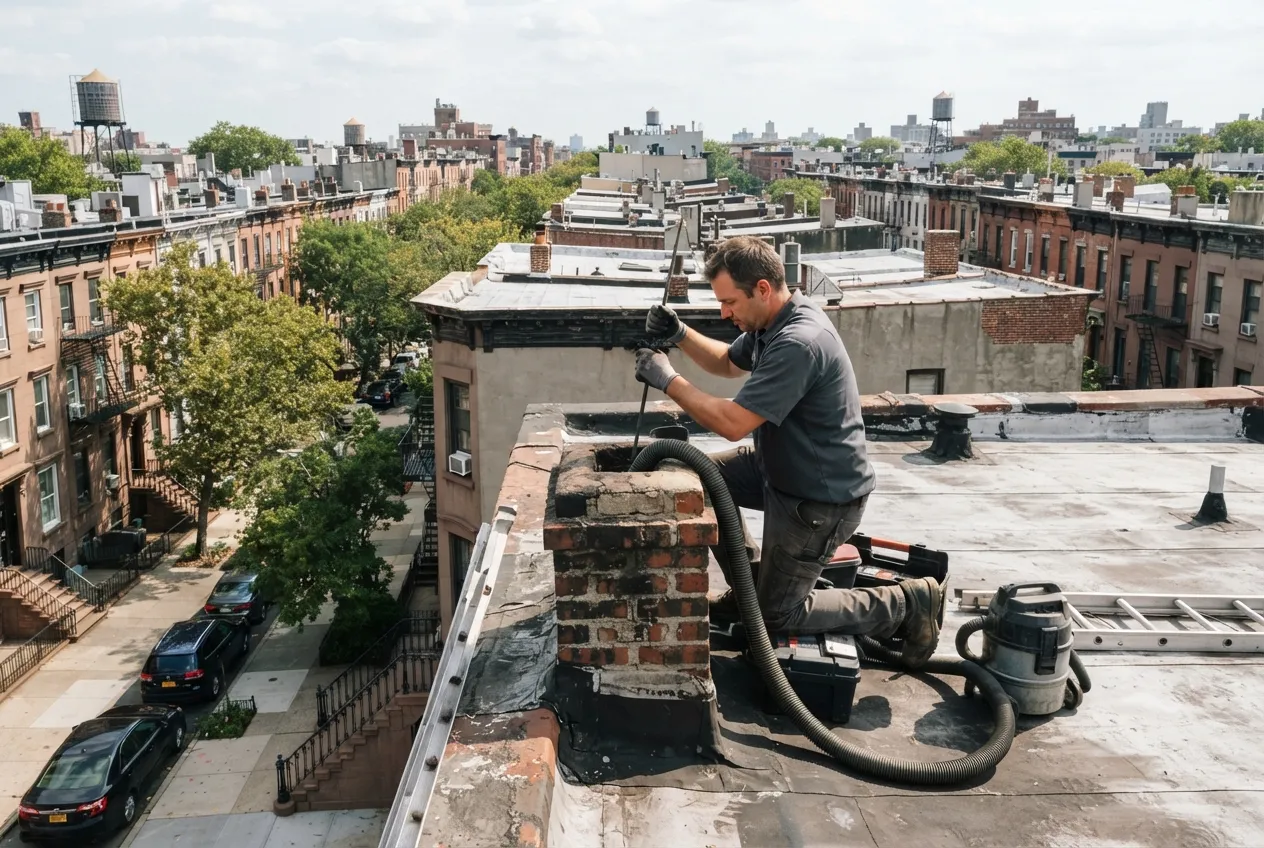
Inside, the first thing we do is protect your floors and furniture. We lay drop cloths from the door to the fireplace, seal off the fireplace opening, and run a HEPA vacuum during the entire cleaning. The vacuum keeps negative pressure at the opening, so the fine soot loosened by the brushes is pulled into the filter instead of drifting into the room. When we pack up, the area around the hearth should look the way it did when we arrived.
Rotary brushes do most of the work. They spin inside the flue and scrape deposits off the liner walls, and we match the brush head to the shape and size of your flue so it cleans without damaging the lining. Heavy, glazed creosote may need a different tool or more than one visit, and we'll tell you if that's the case.
When the job calls for it, we run a camera through the flue to look for cracked tiles, gaps in mortar joints, or damage left by a past chimney fire. You see the same footage we see.
On the roof, technicians check the cap, crown and flashing, and look for loose brick, animal nests and gaps where water can get in. We only go up when it's safe to do so. If the roof is too steep, icy or wet, we'll work from below and reschedule the roof portion rather than take chances.
The standard we follow
We follow NFPA 211, the national standard for chimneys, fireplaces and vents, which calls for these systems to be inspected once a year. Chimney professionals use three inspection levels. A Level 1 inspection is for systems where nothing has changed and covers the accessible parts of the chimney. A Level 2 inspection applies when the system changes, such as a new appliance or a switch of fuel, or when the home is being sold, and it includes a camera look at the inside of the flue. A Level 3 inspection is only for cases where a hidden hazard has to be reached by opening part of the chimney or building.
Fuel changes matter in Brooklyn. When a New York City building converts its boiler from oil to gas, the chimney has to be evaluated as part of the work. A new liner is often needed, because gas exhaust produces acidic condensate that can corrode a masonry flue. If you're planning a conversion, have the chimney looked at early so the liner question doesn't hold up the project.
What affects the cost of a chimney sweep
Every chimney is a little different, so we price the job after we know what it involves. These are the main factors:
- Chimney height and how hard it is to reach the roof safely
- Fuel type, since wood, pellet, oil and gas each leave different deposits
- Flue size, shape and condition, including whether it's lined
- How much buildup there is, especially heavy or glazed creosote
- Whether a camera inspection is needed or any repair follows the sweep
How a visit works
When you book, we'll ask what you burn or what appliance uses the chimney, how often you use it, and whether you've noticed any of the warning signs above. Let your fireplace or stove go cold the night before so the flue is safe to work on, and clear the area in front of the hearth if you can.
On arrival, the technician walks through the plan with you, sets up protection and the HEPA vacuum, and sweeps the chimney. Afterward, they go over what they found, show you photos or camera footage, and point out anything that should be fixed. You decide what happens next. If you heat with oil or gas, scheduling ahead of New York City's heat season, which runs from October 1 through May 31, keeps your heating system ready when building owners have to keep apartments warm.
Chimney Sweep by city
- Chimney Sweep in MadisonLocal service & repairs
- Chimney Sweep in Marine ParkLocal service & repairs
- Chimney Sweep in Mill BasinLocal service & repairs
- Chimney Sweep in Bergen BeachLocal service & repairs
- Chimney Sweep in FlatlandsLocal service & repairs
- Chimney Sweep in Sheepshead BayLocal service & repairs
- Chimney Sweep in Manhattan BeachLocal service & repairs
- Chimney Sweep in Gerritsen BeachLocal service & repairs
- Chimney Sweep in MidwoodLocal service & repairs
- Chimney Sweep in HomecrestLocal service & repairs
- Chimney Sweep in MapletonLocal service & repairs
- Chimney Sweep in GravesendLocal service & repairs