
The short answer
A chimney sweep removes soot, creosote and debris from your flue so smoke and exhaust can leave the house safely. For Bergen Beach homes, the practical approach is a sweep and inspection once a year, ideally before New York City's heat season starts on October 1.
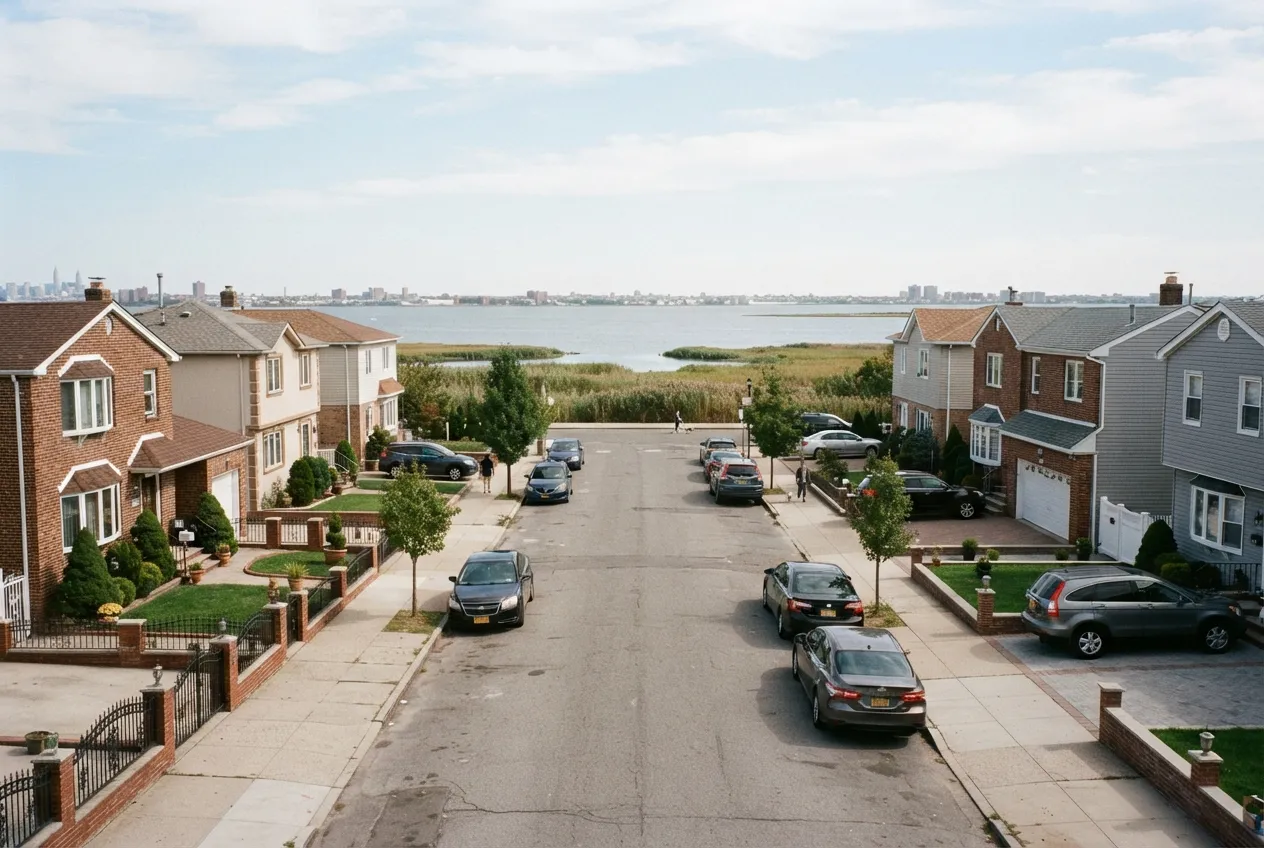
Bergen Beach is mostly a neighborhood of houses, not large apartment buildings. You'll find detached and semi-detached homes, attached brick houses, and newer construction mixed among older homes. Many of them have a wood-burning fireplace, a boiler or furnace that vents through a masonry chimney, or both. EliteSweep Chimney Services is based in Madison, about a mile west, so homes in Bergen Beach (ZIP 11234) are a short trip for our crew. Our certified technicians clean the flue, look closely at what they find along the way, and explain in plain terms what shape your chimney is in and what, if anything, needs attention.
What a Chimney Sweep Covers
A sweep is more than running a brush up the chimney. Before we start, we protect the area around the fireplace or appliance connection with drop cloths and use containment so soot stays out of your living space. Then we clean the flue from the bottom, the top, or both, depending on how the chimney is built and how safely the roof can be reached.
While we work, we pay attention to what comes out of the flue and what we can see inside it. Heavy, glazed creosote, broken tile pieces, nesting material or crumbling mortar all tell us something about the chimney's condition.
- Cleaning creosote and soot from the flue, smoke chamber and firebox
- Clearing debris, nests and blockages
- Checking the damper, chimney cap and crown where accessible
- A plain-language report of what we saw, with photos when they help explain a problem
Fireplace Flues and Heating Flues in Bergen Beach Homes
Many houses in the neighborhood have two different jobs going on in one chimney structure: a fireplace flue and a separate flue for the boiler, furnace or water heater. They need different kinds of attention.
Wood-burning fireplaces build up creosote, a tar-like residue that can ignite if it gets thick enough. How fast it builds depends on how often you burn, what wood you use and how well the fire drafts. Heating flues don't usually collect creosote, but they can collect soot, scale and debris, and a blocked heating flue can push exhaust back into the house. We look at each flue on its own terms rather than treating the whole chimney as one item.
When to Schedule Your Sweep
The NFPA 211 standard calls for chimneys, fireplaces and vents to be inspected once a year. Pairing that yearly inspection with a sweep is the simplest routine for most homeowners.
Timing matters in New York City. Heat season runs from October 1 through May 31, and your heating system will run almost constantly through those months. Late summer and early fall are good windows to get the flue cleaned and checked before the boiler or furnace takes on its heaviest load. If you burn wood often, you may also want a check partway through winter.
Some signs mean you shouldn't wait for your usual appointment: a strong smoky or campfire smell in the house, smoke spilling into the room, flakes of black debris in the firebox, water stains around the chimney, or animal sounds inside the flue.
Oil-to-Gas Conversions and Liners
Some Bergen Beach homes still heat with oil, and others have already switched. When a New York City building converts its boiler from oil to gas, the chimney has to be evaluated as part of the work. A new liner is often needed, because gas exhaust produces acidic condensate that can corrode a masonry flue that was fine under oil.
If you're planning a conversion or have recently finished one, a sweep and inspection is a good time to confirm the flue is suited to the new appliance. We'll tell you what we see and whether a liner should be part of the discussion with your heating contractor.
Inspection Levels After the Sweep
Chimney professionals use three inspection levels. A Level 1 inspection fits when nothing about your system has changed. Level 2 applies when the system changes, such as a new appliance or a switch of fuel, or when the home is being sold. Level 3 is used when a hidden hazard has to be reached by opening part of the chimney or the building.
Most yearly visits are Level 1. If you're buying or selling a house in Bergen Beach, or you've just replaced your boiler, ask us about a Level 2 inspection so the work matches the situation.
More services in Bergen Beach
- Chimney Inspection in Bergen BeachLocal service & repairs
- Chimney Repair in Bergen BeachLocal service & repairs
- Air Duct Cleaning in Bergen BeachLocal service & repairs
- Chimney Liner Installation in Bergen BeachLocal service & repairs