
The short answer
EliteSweep's certified technicians sweep fireplace and boiler flues in Dyker Heights homes. We remove creosote, soot and blockages and check the chimney's visible condition. The NFPA 211 standard calls for a yearly inspection, and booking before New York City's heat season starts on October 1 keeps your heating system ready.
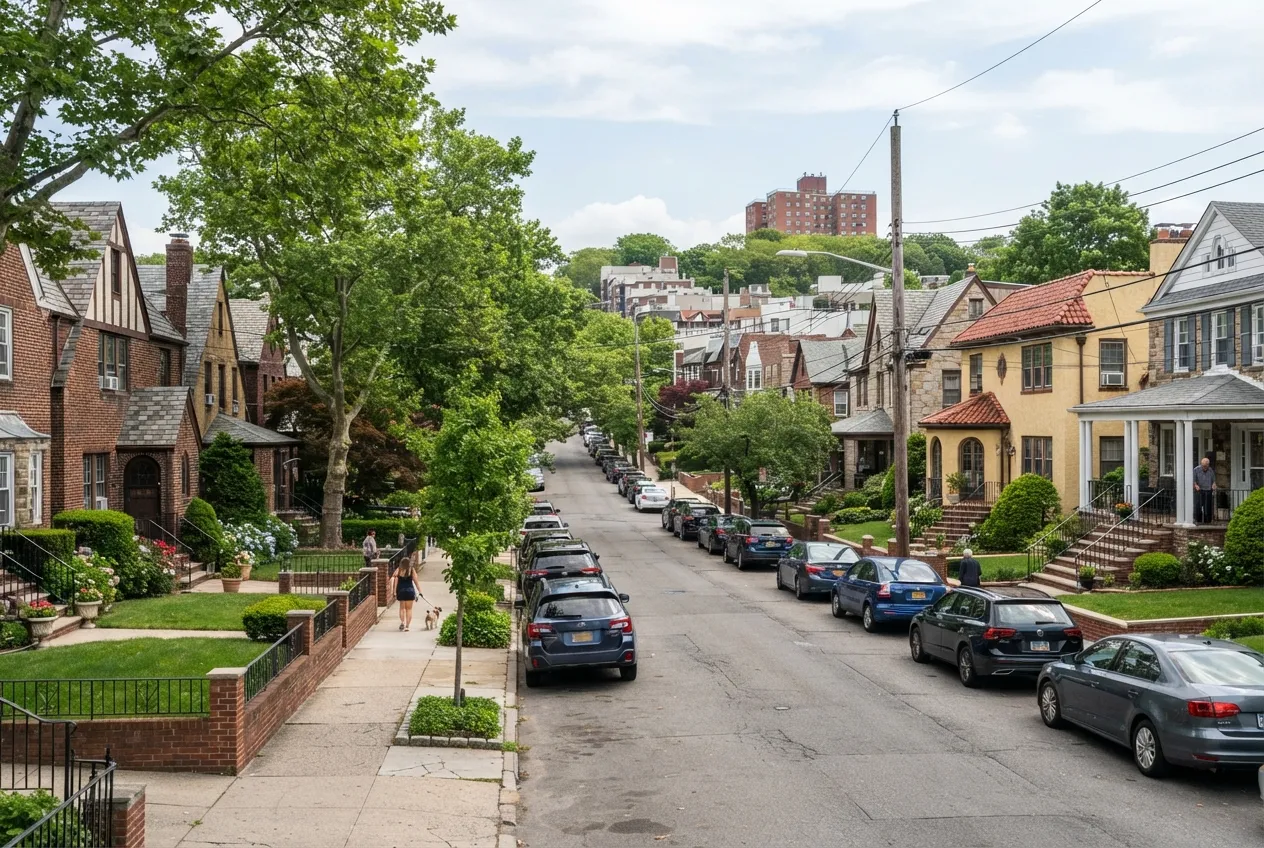
Dyker Heights sits about a mile southeast of our Bay Ridge office, so our crews work in the neighborhood often. Homes across ZIP code 11228 include detached and semi-detached houses, brick rowhouses and two-family homes. Many have a masonry chimney that serves both a wood-burning fireplace and the heating system. EliteSweep's certified technicians sweep these chimneys to remove creosote, soot and debris. Then we look over the flue and its parts, so you know the condition of the system before you light a fire or the boiler runs hard through winter.
What our chimney sweep covers in Dyker Heights homes
A sweep is more than running a brush up the flue. We protect the floor and furnishings around the fireplace and close off the opening so soot stays contained. We use brushes and vacuum equipment sized to your flue. Once the flue is clean, we check every part we can see and reach.
If we find something that needs repair, we explain the problem and your options. We don't do any work you haven't approved.
- Removing creosote, soot and loose debris from the firebox, smoke chamber and flue
- Checking that the damper opens smoothly and seals reasonably well
- Looking for nests, leaves or other blockages, especially near the top of the chimney
- Inspecting the chimney cap and crown for damage that lets in water or animals
- Noting any cracked flue tiles, gaps or deteriorated mortar we can see
- Walking you through what we found, with photos where they help
Fireplace flues and boiler flues are different jobs
Many Dyker Heights houses have more than one flue in the same chimney: one for the fireplace and one for the boiler or water heater. Wood smoke leaves creosote, a tar-like residue that can ignite if it builds up. Heating appliance flues collect soot and scale instead. They can also be blocked by debris that falls from above, which can push exhaust back into the house.
Some buildings have converted their boiler from oil to gas or are planning to. In that case, the chimney has to be evaluated as part of the work. Gas exhaust produces acidic condensate that can corrode a masonry flue, so a new liner is often needed. We can look at your flue's current condition and tell you whether a liner is likely to come up.
When to schedule a chimney sweep
The NFPA 211 standard calls for chimneys, fireplaces and vents to be inspected once a year. Pairing that inspection with a sweep makes sense for most homes that burn wood regularly or vent a heating system through the chimney.
Timing matters in New York City. Heat season runs from October 1 through May 31. During that stretch, building owners must keep apartments heated to the city's minimum temperatures. Scheduling in late summer or early fall means we can handle any problem we find before the boiler is working every day. Fireplace owners benefit from the same timing, because getting the flue cleaned before the first cold snap is easier than squeezing in a visit midwinter.
Inspections come in three levels. Level 1 fits when nothing about the system has changed. Level 2 applies when the system changes, such as a new appliance or a switch in fuel, or when the home is being sold. Level 3 is for a hidden hazard that can only be reached by opening part of the chimney or building.
Signs your chimney needs attention now
Don't wait for the yearly visit if you notice any of these:
- A strong smoky or campfire smell in the house, especially on humid days
- Smoke drifting into the room instead of drawing up the flue
- Black flakes or chunks of creosote falling into the firebox
- Animal sounds, nesting material or debris coming down the chimney
- Water stains, a rusted damper or crumbling masonry near the fireplace
- Soot around the boiler's vent connection
Serving Dyker Heights and nearby neighborhoods
We're based in neighboring Bay Ridge, so Dyker Heights is part of our regular route. We also sweep chimneys in Bensonhurst, Borough Park, Bath Beach and Sunset Park, where the housing mix is similar.
To prepare for your visit, let the fire burn out at least a day ahead and clear a path to the fireplace and boiler. Let us know if anyone in the home has noticed smells, drafts or leaks.
More services in Dyker Heights
- Chimney Inspection in Dyker Heights
- Chimney Repair in Dyker Heights
- Air Duct Cleaning in Dyker Heights
- Chimney Liner Installation in Dyker Heights