
The short answer
Yes. EliteSweep's certified technicians provide chimney, fireplace, dryer vent and air duct service throughout Dyker Heights (ZIP 11228), about a mile from our Bay Ridge office. We recommend booking your yearly inspection and sweep before New York City's heat season starts on October 1.
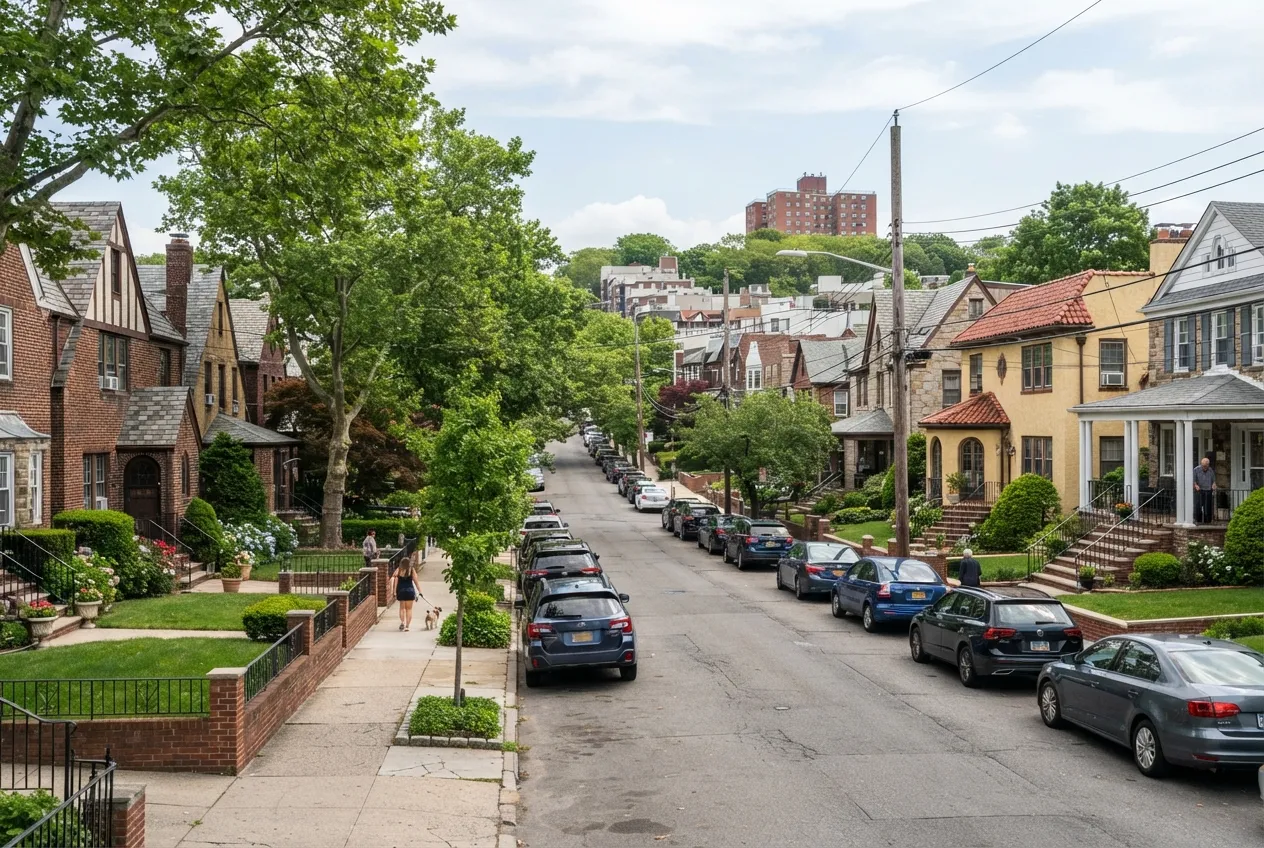
Dyker Heights is about a mile southeast of our Bay Ridge office, so EliteSweep's certified technicians are close by for chimney, fireplace, dryer vent and air duct work across ZIP code 11228. The neighborhood has detached homes, semi-detached and attached houses, two-family homes and small apartment buildings. That means we work on everything from wood-burning fireplaces to oil and gas boiler flues. This page explains what we do here, what Brooklyn weather does to chimneys, and how to plan service around the heating season.
Chimney and Vent Service for Dyker Heights Homes
Many houses in Dyker Heights have a masonry chimney serving a boiler or furnace, and some also have a working fireplace. Both need attention. A heating flue can collect soot, scale and debris that block exhaust, and a fireplace flue builds up creosote with every fire. We clean, inspect and repair both. We also handle the vents and ducts that move air through the rest of the house.
- Chimney sweep and chimney inspection for fireplaces and heating flues
- Chimney repair, chimney rebuilding and chimney waterproofing for brick and block masonry
- Chimney liner installation for boiler, furnace and water heater flues
- Chimney cap and chase cover installation to keep out rain, debris and animals
- Fireplace and damper repair
- Dryer vent cleaning and air duct cleaning
How Brooklyn Weather Wears on a Chimney
New York winters bring repeated freeze-thaw cycles. Water soaks into brick and mortar, then freezes and expands, and each cycle pushes the masonry apart a little more. Over a few seasons the damage shows up as loose bricks, crumbling joints, cracked crowns and white staining on the chimney. Nor'easters and summer thunderstorms add wind-driven rain. A chimney without a cap lets that water fall straight into the flue.
Our usual approach is to stop water first. A cap or chase cover keeps rain and debris out of the top, and crown repair closes the cracks where water collects. A breathable waterproofing treatment helps brick shed water while still letting moisture escape. If the masonry has already moved too far, we will tell you plainly whether repointing is enough or a section needs to be rebuilt.
Inspections, Liners and Oil-to-Gas Conversions
The NFPA 211 standard calls for chimneys, fireplaces and vents to be inspected once a year. A Level 1 inspection fits most homes where nothing has changed. A Level 2 inspection is the right choice when you replace a heating appliance, switch fuels, or buy or sell a house. A Level 3 inspection is for cases where a suspected hidden hazard can only be reached by opening part of the chimney or the building.
In New York City, when a boiler is converted from oil to gas, the chimney has to be evaluated as part of the work. Gas exhaust produces acidic condensate that can corrode a masonry flue, so a new liner is often needed. We can inspect your flue, explain whether it can be reused, and install a properly sized liner if it cannot.
Planning Around Heat Season
New York City's heat season runs from October 1 through May 31. During those months, building owners must keep apartments heated to the city's minimum temperatures. If you own a two-family home or a small building with tenants, a blocked or deteriorated boiler flue in midwinter can leave you scrambling. Scheduling your inspection and sweep in late summer or early fall leaves time to handle repairs, such as a liner, cap or crown fix, before the heat has to run.
Fireplace owners benefit from the same timing. Cleaning before the first fire removes the creosote left from last winter. Checking the damper ahead of time means it will open and seal properly when the weather turns cold.
Dryer Vents and Air Ducts
According to the U.S. Fire Administration, failure to clean is the leading factor contributing to clothes dryer fires in homes. Lint builds up fastest in long vent runs and in vents that travel through walls, ceilings or basements, which is common in attached and multi-family houses. If loads take longer to dry or the laundry area feels unusually hot, the vent is due for cleaning.
For air ducts, we follow the U.S. EPA's guidance. Cleaning makes sense when there is substantial visible mold growth, vermin, or excessive dust and debris. Duct cleaning has not been shown to prevent health problems, so we look first and tell you honestly whether your system needs it. We explain any chemical treatment before using it. We also suggest researching the process before responding to any company that advertises very cheap duct cleaning.
Nearby Neighborhoods We Serve
Our office is in Bay Ridge, so Dyker Heights is one of the closest neighborhoods we cover. We also serve Bay Ridge, Bensonhurst, Borough Park, Bath Beach and Sunset Park. If you own property in more than one of these areas, we can often coordinate the visits.
ZIP codes we serve
- 11228
Services in Dyker Heights
- Chimney Sweep in Dyker Heights
- Chimney Inspection in Dyker Heights
- Chimney Repair in Dyker Heights
- Air Duct Cleaning in Dyker Heights
- Chimney Liner Installation in Dyker Heights