
The short answer
EliteSweep sends certified chimney sweeps to Stapleton from our Bay Ridge office, about 3 miles away. The NFPA 211 standard calls for chimneys, fireplaces and vents to be inspected once a year. A sweep clears the creosote, soot and debris that the inspection finds.
Stapleton homes use chimneys in more than one way. Wood-burning fireplaces in older rowhouses and detached homes, boiler flues in pre-war apartment buildings, and vents for gas appliances all need to stay clear to work safely. EliteSweep Chimney Services sends certified technicians to Stapleton from our office in Bay Ridge, Brooklyn, about 3 miles east. Below is what a sweep involves, how Stapleton's housing affects the work, and when to schedule a visit.
What a Chimney Sweep Does in a Stapleton Home
A sweep removes creosote, soot and debris from the flue, smoke chamber and firebox. Creosote is the tar-like residue that wood smoke leaves behind. It builds up in layers and can ignite inside the flue. Gas and oil appliances leave less visible buildup, but their flues still collect soot, scale and debris that can block exhaust.
Our technicians lay down drop cloths, seal off the fireplace opening, and use brushes and vacuums sized to your flue so dust stays out of the room. We look at every part we can reach, both before and after cleaning, and tell you what we found.
- Brushing the flue liner from the top or the bottom, depending on access
- Clearing the smoke shelf, the damper area and the firebox
- Removing nests, leaves and fallen debris
- Checking the damper, the cap and the visible masonry
- Explaining any problems we find, with photos when possible
How Stapleton's Housing Affects Your Chimney
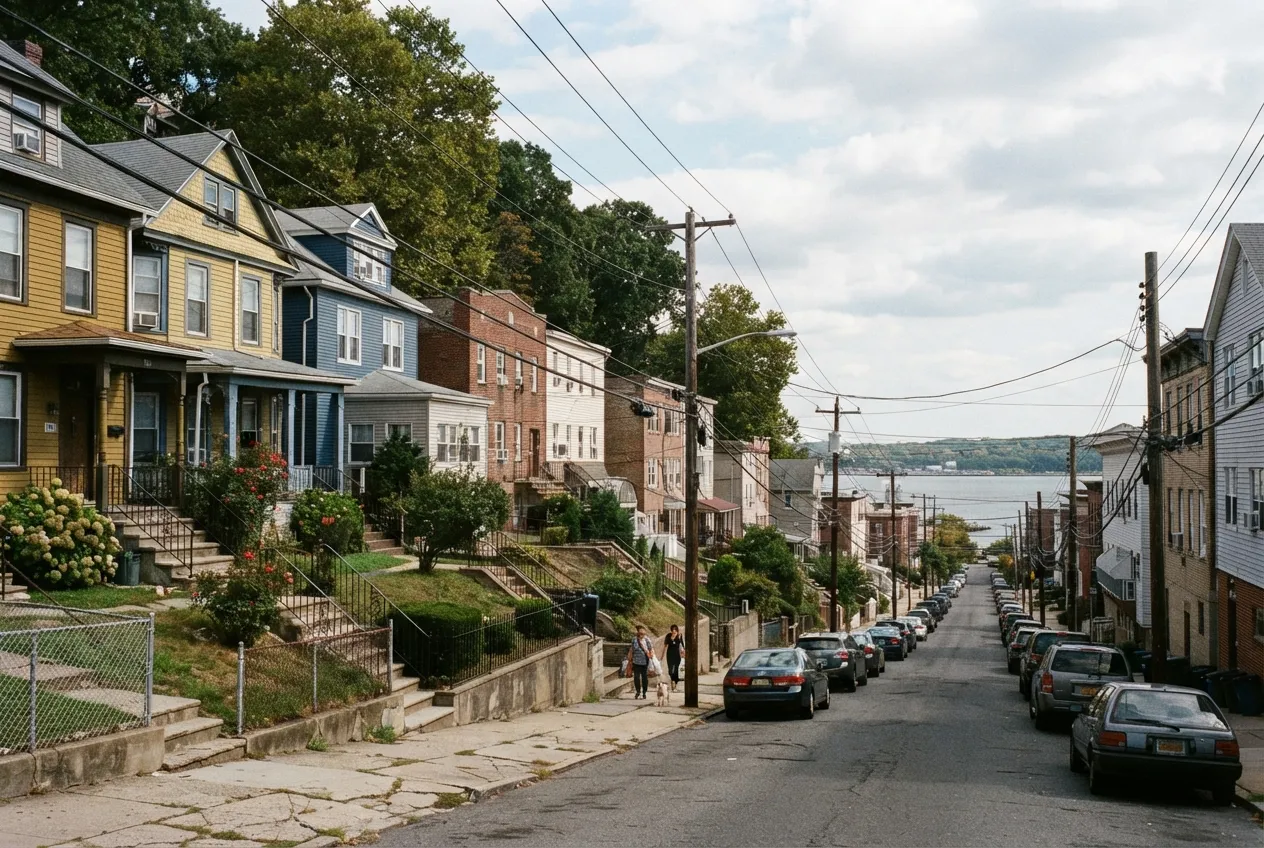
Stapleton has a mix of older rowhouses, detached homes and pre-war apartment buildings, along with newer construction. Older masonry chimneys may have cracked clay tile liners or weathered mortar joints. Some have fireplaces that were closed off and later reopened. Detached homes often have taller, more exposed chimneys that take the full force of wind and rain. In apartment buildings, the main concern is usually the boiler flue rather than a fireplace.
We adjust our approach to the building. A fireplace in a single-family house, a shared flue in a multi-unit building, and a liner serving a modern boiler each call for different tools and different checks.
How Often to Schedule a Sweep
The NFPA 211 standard calls for chimneys, fireplaces and vents to be inspected once a year. Inspection and sweeping work together. The inspection shows whether cleaning is needed, and the cleaning gives the technician a clear view of the flue surface.
Chimney professionals use three inspection levels. Level 1 is for a system where nothing has changed. Level 2 applies when the system changes, such as a new appliance or a switch of fuel, or when the home is sold. Level 3 is for a hidden hazard that can only be reached by opening part of the chimney or building.
Schedule a visit sooner than once a year if you burn wood often, or if you notice a smoky smell, a weak draft, or flakes of black material in the firebox.
Planning Around Heat Season and Oil-to-Gas Conversions
New York City's heat season runs from October 1 through May 31. During that time, building owners must keep apartments heated to the city's minimum temperatures. For Stapleton building owners, late spring and summer are the practical time for boiler flue work, because taking a heating system offline in January causes much bigger problems.
If your building is converting its boiler from oil to gas, the chimney has to be evaluated as part of the job. Gas exhaust produces acidic condensate that can corrode a masonry flue, so a new liner is often needed. We can sweep and inspect the flue so you know its condition before the conversion goes ahead.
Serving Stapleton and Nearby Neighborhoods
Our crews work throughout Stapleton and neighboring Tompkinsville on Staten Island. In Brooklyn, we also serve Bay Ridge, Dyker Heights, Bath Beach and Sunset Park. When you contact us, tell us what kind of building you have, what the chimney serves, and when it was last cleaned. That helps us bring the right equipment and set aside enough time for the visit.
If we find a problem that needs more than a sweep, we explain your options and leave the decision to you.
More services in Stapleton
- Chimney Inspection in Stapleton
- Chimney Repair in Stapleton
- Air Duct Cleaning in Stapleton
- Chimney Liner Installation in Stapleton