
The short answer
EliteSweep sends certified chimney sweeps from our nearby Bay Ridge office to homes and buildings across Borough Park (11219). We clean fireplace and boiler flues, check dampers, caps and liners, and recommend booking before New York City's heat season begins on October 1.
Borough Park homes depend on their chimneys more than many people realize. Wood-burning fireplaces in older rowhouses and detached homes, and the flues that vent boilers and water heaters in two-family houses and pre-war apartment buildings, all collect soot, creosote and debris over time. EliteSweep Chimney Services sends certified technicians from our Bay Ridge office, about 2 miles away, to clean and inspect chimneys throughout ZIP code 11219. We explain what we find in plain terms, show you photos when something needs attention, and leave the work area as clean as we found it.
What a Chimney Sweep Visit Includes
A sweep is more than running a brush up the flue. We start by covering the floor and furnishings around the fireplace or appliance with drop cloths and setting up a high-powered vacuum so soot stays contained. Then we clean the flue from the bottom, the top, or both, depending on how the chimney is built and how safely the roof can be reached.
If something looks wrong, such as a cracked flue tile or hard, glazed creosote that brushing won't remove, we stop and talk with you before doing any additional work.
- Brushing the flue to remove soot and creosote buildup
- Cleaning the firebox, smoke shelf and smoke chamber on wood-burning fireplaces
- Checking that the damper opens, closes and seals properly
- Removing nests, leaves and fallen masonry from the flue and base
- Looking over the chimney cap and crown for cracks or missing pieces
- A plain-language rundown of what we saw, with photos of any problem areas
Chimneys in Borough Park Homes and Buildings
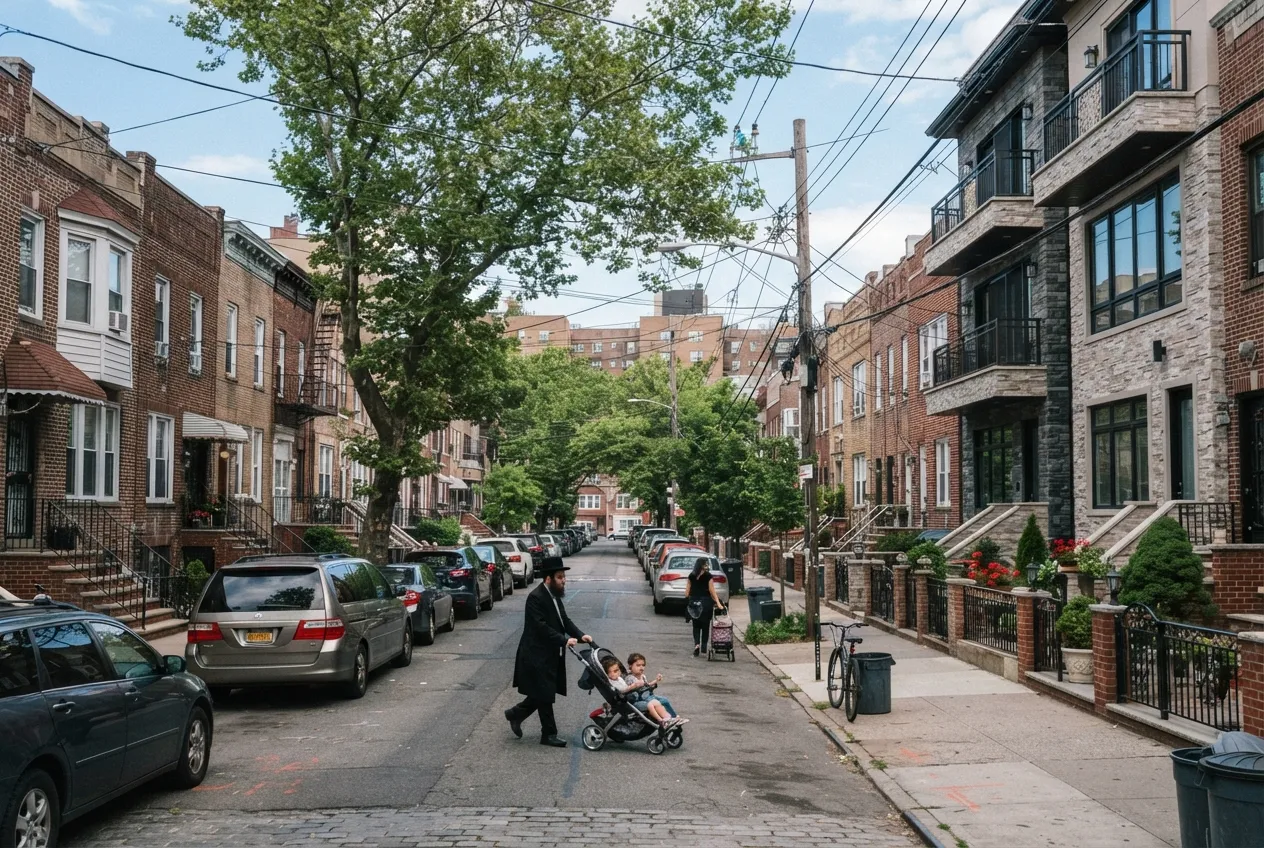
Much of Borough Park's housing is older masonry: attached rowhouses, semi-detached and detached homes, and pre-war apartment buildings. Many of these chimneys were built for coal or oil and now vent gas boilers and water heaters, while some homes still have fireplaces that see regular use. Each setup builds up a different kind of residue, so we adjust our brushes and methods to the flue in front of us.
In attached rowhouses, chimneys often run along a shared wall and roof access can be tight. Our technicians plan around your roof layout and your neighbors, and when going up top isn't practical we can often do the cleaning from inside. In apartment buildings, we coordinate with owners and supers so the boiler is shut down and cool before we start.
Yearly Inspections and the NFPA 211 Standard
The NFPA 211 standard calls for chimneys, fireplaces and vents to be inspected once a year. A yearly visit is the simplest way to catch creosote, blockages and masonry damage before they become a fire or carbon monoxide risk.
Chimney professionals use three inspection levels. A Level 1 inspection fits a system where nothing has changed. A Level 2 is called for when the system changes, for example a new appliance or a switch of fuel, or when the home is sold. A Level 3 is used when a hidden hazard has to be reached by opening part of the chimney or building.
Plan Your Sweep Before Heat Season
New York City's heat season runs from October 1 through May 31. During those months, building owners must keep apartments heated to the city's minimum temperatures, so a boiler can't sit idle for long. If you own a two-family home or a small apartment building, late spring through early fall is the easiest time to have the boiler flue swept and checked, because a problem found then can be fixed without leaving tenants cold.
Homeowners with fireplaces benefit from the same timing. A sweep after the burning season removes creosote before it sits through humid summer months, and it leaves time to replace a cap or repair a damper before the first fire in autumn.
Converting From Oil to Gas
Many Borough Park buildings have switched their boilers from oil to gas, and more are planning to. When a New York City building converts from oil to gas, the chimney has to be evaluated as part of the work. A new liner is often needed, because gas exhaust produces acidic condensate that can corrode a masonry flue.
We sweep out old oil soot, inspect the flue and tell you whether the existing setup is suitable for gas. If you're planning a conversion, contact us early so the chimney evaluation fits into your project schedule instead of holding it up.
More services in Borough Park
- Chimney Inspection in Borough Park
- Chimney Repair in Borough Park
- Air Duct Cleaning in Borough Park
- Chimney Liner Installation in Borough Park