
The short answer
Borough Park homeowners should have their chimney inspected once a year, as the NFPA 211 standard recommends, and again whenever they change heating equipment or sell the house. EliteSweep's certified technicians inspect fireplaces, boiler flues and vents across 11219 and explain which inspection level your home actually needs.
If your Borough Park home has a fireplace, a wood or gas stove, or a boiler or water heater that vents through a chimney, that chimney should be checked once a year. EliteSweep Chimney Services sends certified technicians from our Bay Ridge office, about 2 miles away, to inspect chimneys and flues throughout the 11219 ZIP code. We look at the parts you can see and the parts you can't, explain what we find in plain language, and tell you whether something needs attention now or can safely wait.
Why a Yearly Chimney Inspection Matters
The NFPA 211 standard calls for chimneys, fireplaces and vents to be inspected once a year. That applies whether you burn wood every weekend or only run a gas boiler. A chimney can look fine from the sidewalk while the flue inside is cracked, partly blocked, or lined with creosote or debris.
Chimney professionals use three inspection levels. Level 1 is the routine yearly check when nothing about your system has changed. Level 2 is needed when something does change, such as a new boiler, a switch from oil to gas, or the sale of the home. Level 3 is reserved for cases where a suspected hidden hazard can only be reached by opening part of the chimney or the surrounding wall.
What We Check in Borough Park Homes
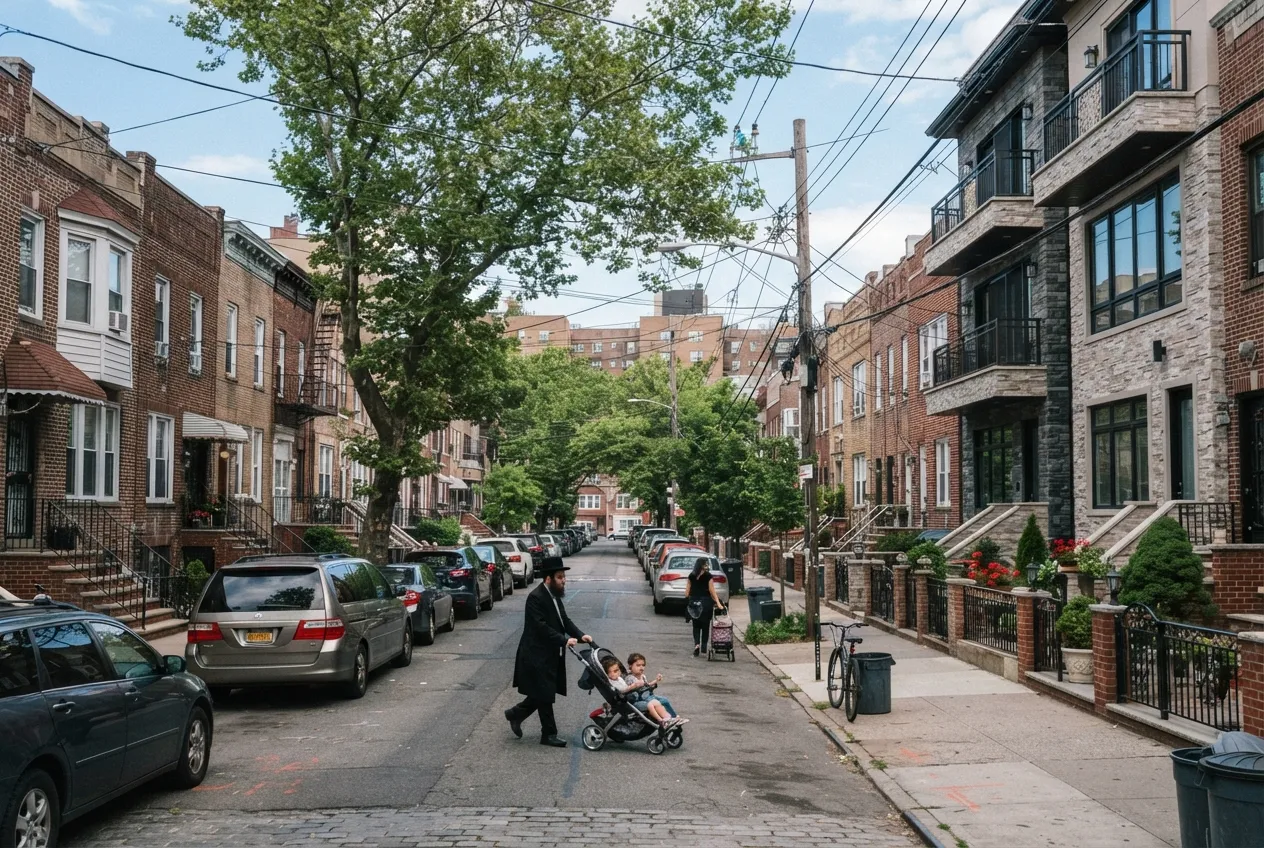
Borough Park has a mix of attached brick rowhouses, semi-detached and detached houses, and pre-war apartment buildings. Many of these homes have chimneys that serve a boiler or water heater rather than a fireplace, and some have been renovated or extended over the years. Additions, rooftop work and shared party walls can all affect how a chimney performs, so we look at the whole venting system, not just the firebox.
A typical inspection covers:
- Chimney crown, cap and exterior masonry for cracks, missing mortar and water entry
- Flue liner condition, including cracks, gaps and signs of corrosion
- Creosote, soot and debris buildup inside the flue
- Blockages from nests, fallen masonry or leaves
- Smoke chamber, damper and firebox on fireplaces
- Connector pipes from boilers and water heaters to the chimney
- Clearances to wood framing and other combustible materials
Converting From Oil to Gas
Many Brooklyn buildings have switched or are planning to switch their boilers from oil to gas. In New York City, the chimney has to be evaluated as part of that conversion. A new liner is often needed, because gas exhaust produces acidic condensate that can corrode an unlined or older masonry flue over time.
If you are planning a conversion, or have recently finished one, a Level 2 inspection tells you and your heating contractor whether the existing flue is suitable or needs to be relined. It is far easier to sort this out during the project than after damage shows up inside your walls.
Timing Your Inspection Around Heat Season
New York City's heat season runs from October 1 through May 31. During those months, owners of apartment buildings must keep units heated to the city's minimum temperatures, which means boilers run hard and chimneys carry exhaust almost nonstop.
The easiest time to inspect is in late spring or summer, after the boiler has a break and before the cold returns. That leaves time to schedule repairs without rushing. If you notice smoke backing up, a strong odor, water stains near the chimney, or falling debris in the firebox, don't wait for the off-season. Call for an inspection right away.
After the Inspection
When we finish, we walk you through what we saw. For Level 2 inspections, that usually includes video or photos from inside the flue so you can see the condition for yourself. We separate urgent safety problems from routine maintenance and items to watch, so you can plan sensibly.
If the chimney needs cleaning, we can usually handle it on the same visit or schedule it soon after. If repairs or a liner are needed, we explain the options and why each one fits your situation.
Serving Borough Park and Nearby Neighborhoods
Our technicians work throughout Borough Park and across southwest Brooklyn, including Dyker Heights, Sunset Park, Bensonhurst, Bay Ridge and Bath Beach. Since our office is close by, getting to your home is simple whether you live in a rowhouse, a detached house, or a multi-unit building.
More services in Borough Park
- Chimney Sweep in Borough Park
- Chimney Repair in Borough Park
- Air Duct Cleaning in Borough Park
- Chimney Liner Installation in Borough Park