
The short answer
A chimney sweep removes soot, creosote and debris from the flue so smoke and exhaust can leave your Bath Beach home safely. The NFPA 211 standard calls for a yearly inspection, so most homeowners schedule a sweep and inspection together before the heating season starts in October.
Bath Beach homes rely on chimneys more than many people realize. A brick flue may serve a fireplace in a detached house, a gas furnace in a two-family home, or an older boiler in a pre-war apartment building. EliteSweep Chimney Services is based in Bay Ridge, about 2 miles from Bath Beach, and our certified technicians sweep chimneys throughout ZIP code 11214. This page covers what a sweep involves, what tends to come up in local housing, and when to schedule one.
What a Chimney Sweep Covers
A sweep cleans the inside of the flue, the passage that carries smoke and combustion gases out of the house. On a wood-burning fireplace, that means removing creosote, the tar-like residue left by burning wood. Creosote builds up in layers and can ignite. On a flue that serves a gas or oil appliance, a sweep removes soot, flaking masonry, and debris such as leaves or nesting material that can block the exhaust path.
We protect the area around the fireplace or appliance before we start, then brush the flue from the bottom, the top, or both, depending on access. We vacuum the debris as we work, then look over the firebox, damper, smoke chamber and visible parts of the flue. If something needs attention, we explain what we saw and show you photos when we can.
Chimneys in Bath Beach Housing
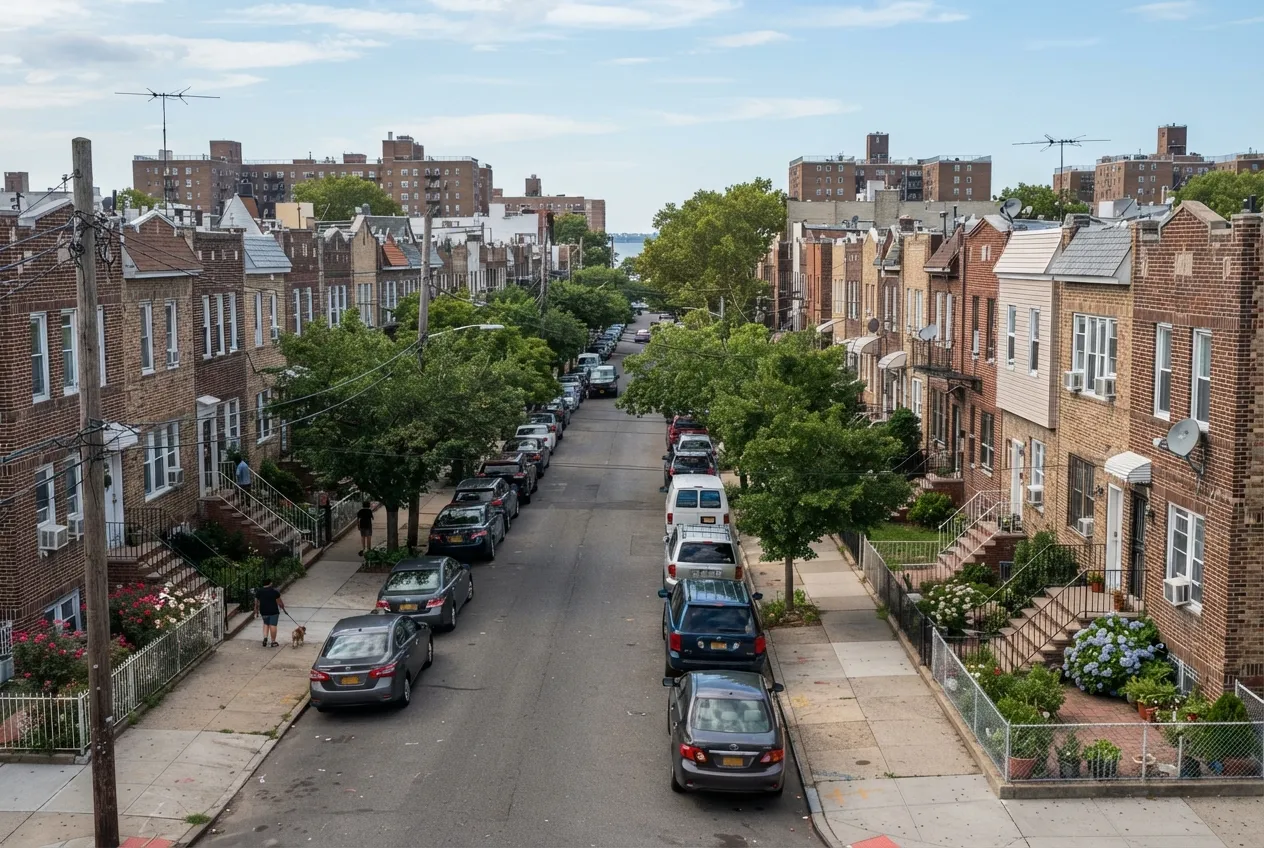
Bath Beach has a mix of detached and semi-attached houses, attached rowhouses, and pre-war brick apartment buildings. Each type tends to raise its own chimney questions.
Many houses here have a masonry chimney that once served an oil burner or a coal furnace and now vents a newer gas appliance. Older flues were not always built for the exhaust these appliances produce, and the clay tiles or mortar joints inside may have cracked or shifted over decades of use. In attached homes, chimneys can sit close to a neighbor's wall or share a stack, so a careful look at the flue matters even if you rarely use a fireplace.
- Detached and semi-attached houses: fireplace flues, furnace and water heater flues, and caps exposed to wind and rain
- Rowhouses: shared or closely spaced stacks and roof access that needs planning
- Pre-war apartment buildings: boiler chimneys that see heavy use during the heating season
Oil-to-Gas Conversions and Flue Liners
When a New York City building converts its boiler from oil to gas, the chimney has to be evaluated as part of the work. A new liner is often needed because gas exhaust produces acidic condensate that can corrode a masonry flue over time.
If your Bath Beach property has already converted, or is planning to, a sweep is a good time to check the condition of the flue. We can tell you whether the existing liner appears sound, whether we see signs of condensation damage such as crumbling mortar or staining, and what your options are if a liner is needed.
When to Schedule a Sweep and Inspection
The NFPA 211 standard calls for chimneys, fireplaces and vents to be inspected once a year. Chimney professionals use three inspection levels. A Level 1 inspection fits when nothing about the system has changed. A Level 2 inspection applies when the system changes, such as a new appliance or a switch of fuel, or when the home is sold. A Level 3 inspection is used when a hidden hazard has to be reached by opening part of the chimney or building.
New York City's heat season runs from October 1 through May 31, when building owners must keep apartments heated to the city's minimum temperatures. For landlords and owners of multi-family buildings, late summer and early fall is the practical window to sweep and inspect before the boiler runs daily. Homeowners with fireplaces often book at the same time so the flue is ready for the first cold night.
- You smell smoke or a sour, burnt odor near the fireplace
- Smoke drifts into the room instead of going up the flue
- You see black flakes or chunks in the firebox
- You hear animals or find debris near the damper
- You replaced a furnace, boiler or water heater, or changed fuel
- You are buying or selling a home
Serving Bath Beach and Nearby Neighborhoods
Our office is in Bay Ridge, so Bath Beach is a short trip for our crew. We also sweep chimneys in Bensonhurst, Dyker Heights, Bay Ridge, Borough Park and Sunset Park. Wherever you are, we arrive with drop cloths and vacuums, explain what we find in plain language, and leave the work area clean.
More services in Bath Beach
- Chimney Inspection in Bath Beach
- Chimney Repair in Bath Beach
- Air Duct Cleaning in Bath Beach
- Chimney Liner Installation in Bath Beach